In the manner of a Haruki Murakami novel, we step off the train once more and emerge from the tiny station onto a different plane of existence
As if unfolding a scene from a Haruki Murakami novel, we disembark from yet another train, and upon taking the exit of the small station, a parallel reality seems to open up before us. Everything appears to be seemingly equal and coherent to what one would expect to find in a place like this; yet, as we walk through the deserted streets of the village, with the silent and odorless air enveloping us, the sensation is that we have crossed a boundary, a stargate uniting two worlds. It’s akin to watching a film and marveling at the meticulous attention to detail, so obsessive that even the moss on the stones at the edge of the road appears to follow a pattern that mimics spontaneous propagation. And it’s even better than a film, because you can look all around without ever ceasing to discover new details. You can step away and approach each shop window, each stone, or window, and realize that within each detail, there are a thousand others.
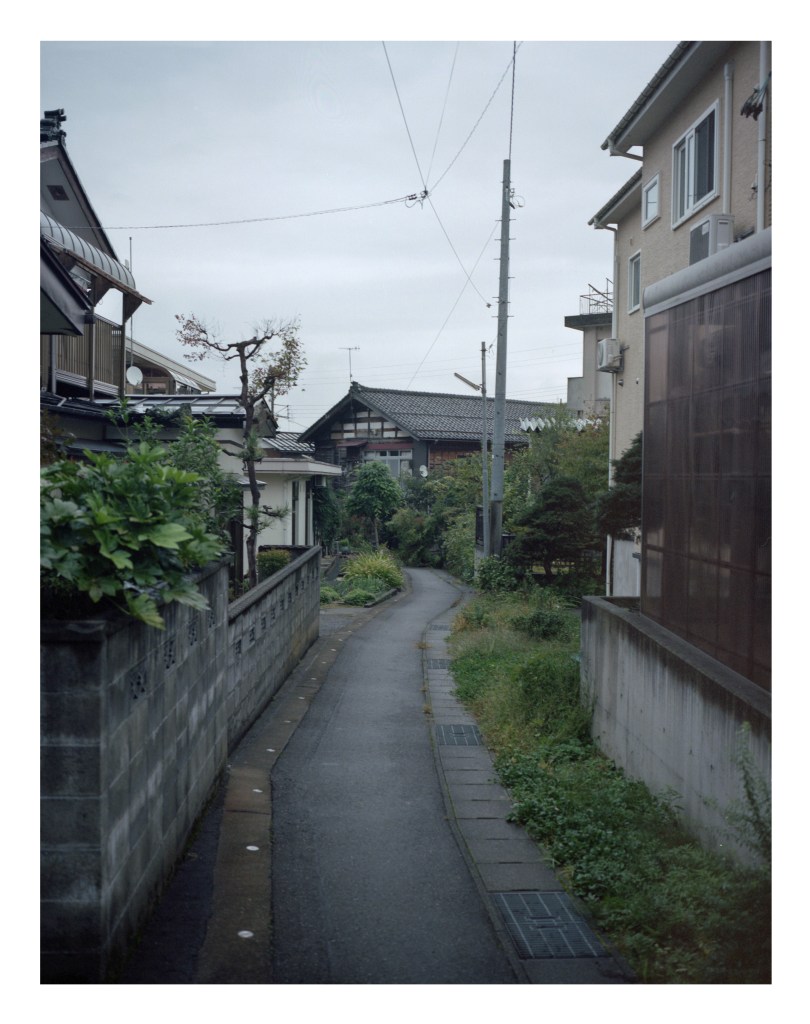
The feeling is almost overwhelming, much like gazing into one’s own image reflected infinitely between two mirrors. It’s hard to believe that reality could be the projection of layers upon layers of meaning that accumulate on the substance of everything visible to our eyes. With the casual eye of everyday life, everything that passes before us is exactly what it is and nothing more.
Upon passing through the doorway of a hidden village station on the other side of the world, everything seems to want to convey something. Something beyond mere appearances. Perhaps the stargate isn’t that station; perhaps the passage occurs much earlier, during the twelve-hour flight to arrive here, when our bodies twist through the sky, oblivious to the earth flowing beneath our feet. It only takes a while to realize that we are not in the same present, but in a parallel one. I’m not talking about the fact that here it seems like the future, or any of the other clichés that travelers can’t wait to affirm. The level we have stepped into now – understood far from Tokyo and its enchanting modernisms – is more akin to a past that has vanished in the western parts of the world. I don’t believe a Japanese person ever feels this sensation; instead, it seems more characteristic of Westerners. This might explain the immense allure that many can hardly resist, dedicating their entire lives to this country. Unlike Westerners, the Japanese do not undergo the rigid education of the Japanese school system, its social rules that reflect upon every interpersonal relationship, familial pressures, or collective sentiments that oppress many, especially the youth. Westerners can experience the country, free from oppressive psychological architectures, fully embracing the equilibrium that political and social design have traced for centuries in the archipelago. They readily adapt to being kinder to everyone, respecting others and the country itself without a hint of disdain. The Western tourist in Japan appears under a spell, feeling a bit disoriented and just as accommodating. The charm we experience in Japan lies in the small things: the muted colors of train interiors, the organized chaos of potted plants lining the streets, the cold light of vending machines at the entrance of tiny alleys, the melancholic chirping of pedestrian traffic lights. Just as there are people who are not captivated by Japanese reality and instead remain entirely immune to it, this is entirely justified.For those who have fallen victim to the spell, there are infinite sources to continually renew its effectiveness. Venturing beyond the tourism that attempts to compile lists of the best places to visit or the must-see attractions will help you understand much more about why this peculiar country has made an impression on your heart.”Nipponia” aims to be precisely this – a glimpse into the numerous facets of Japan, an open, welcoming, and impartial eye on the everyday lives of the less touristy communities in the country. Through photographs, videos, and articles, we aspire to give shape to our perspective and attempt to grasp what makes this culture truly unique.To better comprehend Japan and its people, we believe it’s imperative to explore the relationships between the diverse forms of spirituality that intertwine with daily life – an ongoing dialogue between spirits and humans, in which all living forms are called upon to participate. We seek to uncover the numerous local festivals, folklore traditions, customs, and practices that form the foundation of rural, mountainous, and coastal communities, far removed from the bustling metropolises.Ultimately, Nipponia serves as a vessel of stories, lives, nature, and culture, viewed through the lens and pen of two photographers curious to understand why this archipelago enchanted them long ago.
(english translation by chatgpt)
“Dall’altra parte” ( versione originale )
Come in un romanzo di Murakami Haruki, scendiamo dall’ennesimo treno, e imboccata l’uscita della piccola stazione sembra aprirsi davanti a noi una realtà parallela. Tutto è apparentemente uguale e coerente a quello che ci si aspetterebbe di trovare in un luogo del genere; ma la sensazione che si ha camminando per le vie deserte del villaggio, con l’aria che ci avvolge silenziosa e inodore, è quella di aver oltrepassato un confine, uno stargate che unisce due mondi. È come guardare un film e stupirsi di come abbiano pensato a ogni dettaglio, in maniera tanto maniacale che anche il muschio sui sassi al bordo della strada sembra seguire un disegno che ne imita lo spontaneo propagarsi. Ed è anche meglio di un film, perché ci si può guardare tutt’attorno senza finire mai di scoprire nuovi dettagli. Ci si può allontanare e avvicinare quanto e quando si vuole a ogni vetrina, a ogni pietra o finestra, e constatare che dentro a ogni dettaglio ce ne sono mille altri. La sensazione è quasi opprimente, come lo è guardare la propria immagine riflessa all’infinito tra due specchi. Non ci si crede che la realtà possa essere la proiezione di strati e strati di significati che si sommano sulla materia di ogni cosa visibile ai nostri occhi. Con l’occhio pigro di casa, tutto quello che ci passa davanti è esattamente ciò che è e niente di più.
Attraversata la porta della stazione di un invisibile villaggio di quest’altra parte del mondo, tutto sembra volerci dire qualcosa. Qualcosa di più di ciò che appare. Forse lo stargate non è quella stazione, forse il passaggio avviene molto prima, nelle dodici ore di volo per arrivare qui, quando i nostri corpi si contorcono nel cielo incoscienti della terra che scorre sotto ai piedi. Ci vuole solo un po’ per rendersi conto che non siamo nello stesso presente, ma in uno parallelo. Non sto parlando del fatto che qui sembri il futuro e di tutti gli altri luoghi comuni che il viaggiatore non vede l’ora di constatare. Il livello su cui siamo saltati ora – e si capisce lontano da Tokyo e dai suoi ammalianti modernismi – è più simile a un passato che nella parte ovest del mondo è ormai scomparso. Non credo che un giapponese provi mai questa sensazione, che piuttosto sembra propria degli occidentali, e questo forse spiega l’enorme fascino cui molti possono solo soccombere fino a dedicare i viaggi di una vita a questo paese.
Gli occidentali non subiscono la rigida educazione del sistema scolastico nipponico, le sue regole sociali che si riflettono su ogni relazione interpersonale, le pressioni familiari o i sentire collettivi che opprimono molti, soprattutto i giovani. L’occidentale può fare esperienza del paese, libero da architetture psicologiche opprimenti, godendo appieno dell’equilibrio che il disegno politico e sociale ha delineato per secoli nell’arcipelago. Ci si adatta in fretta e volentieri a essere più gentili con tutti, a rispettare il prossimo e il paese stesso senza storcere il naso.
Il turista occidentale in Giappone sembra sotto l’effetto di un incantesimo che lo fa sentire un po’ spaesato e lo rende altrettanto accomodante. Il fascino che subiamo in Giappone sta nelle piccole cose, nei colori spenti degli interni di un treno, nel caos ordinato dei vasi di piante ai bordi delle strade, nella luce fredda dei distributori automatici all’imbocco di vicoli minuscoli, nel cinguettio malinconico dei semafori pedonali.Ci sono altrettante persone che non vengono ammaliate dalla realtà giapponese, e che al contrario ne rimangono del tutto immuni. Ed è giusto sia così.
Per quelli che invece sono caduti vittima dell’incantesimo, ci sono infinite fonti per rinnovarne costantemente l’efficacia. Spingersi al di là di quel turismo che tenta di stilare classifiche sui migliori posti da visitare o degli imperdibili must see vi farà capire molto di più del perché questo strano paese ha fatto breccia nel vostro cuore.Nipponia si propone di essere proprio questo, uno spiraglio sulle numerose realtà del Giappone, un occhio aperto, accogliente, imparziale sulla quotidianità nelle comunità meno turistiche del paese. Attraverso foto, video e articoli vogliamo dare una forma al nostro sguardo e cercare di afferrare ciò che rende unica questa cultura.
Per capire meglio il Giappone e il suo popolo, crediamo sia imprescindibile indagare le relazioni tra le sfaccettate forme di spiritualità che si insinuano nella vita quotidiana – in un continuo dialogo tra spiriti e uomini, in cui tutte le forme viventi sono chiamate a partecipare – e scoprire i numerosi festival locali, le tradizioni folkloristiche, usi e costumi su cui si fondano le comunità rurali, montane e costiere, lontane dalle grandi metropoli.Infine Nipponia è un contenitore di storie, di vite, di natura e di cultura, attraverso la lente e la penna di due fotografi curiosi di scoprire perché questo arcipelago li ha stregati molto tempo fa.
 Nipponia Magazine