
Uji, Kyoto Prefecture –
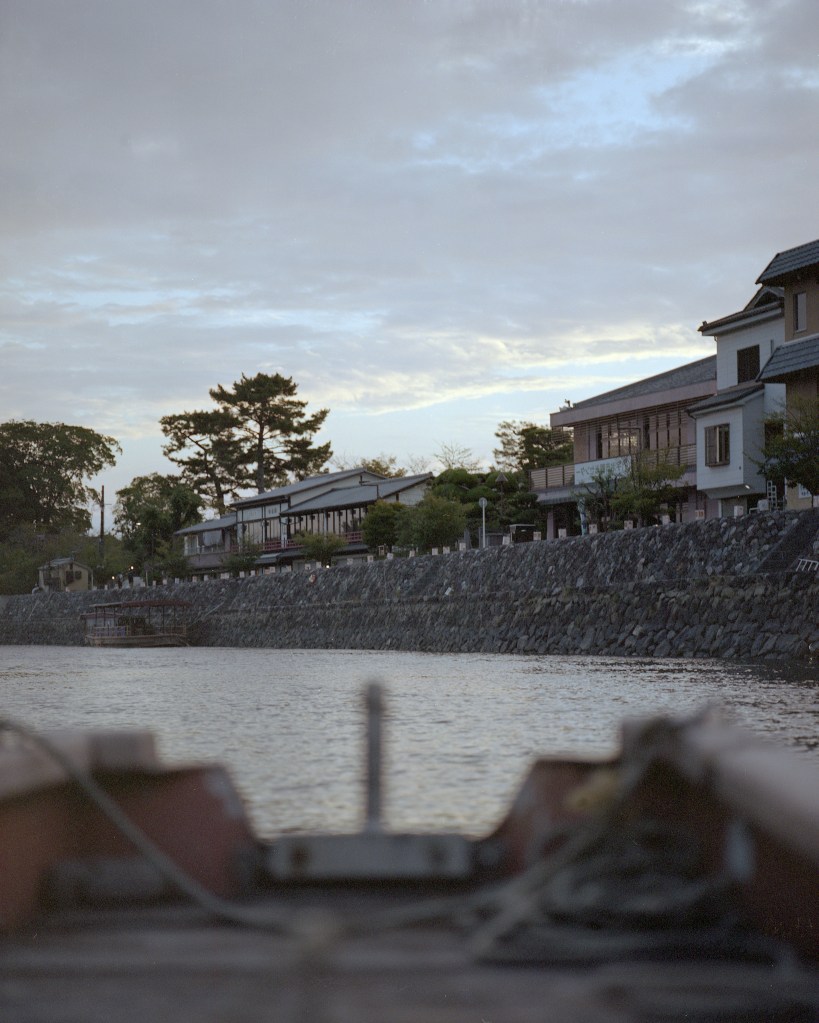
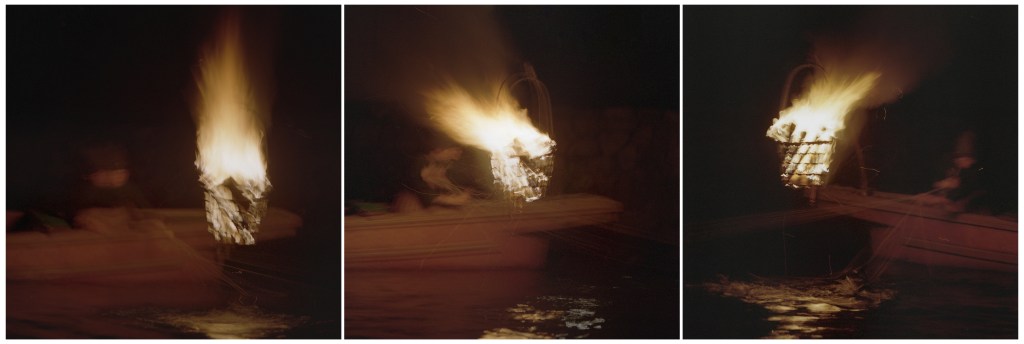
La barca si ferma al centro del fiume, dove la curva rallenta la corrente. Il timoniere getta la piccola àncora parcheggiando dietro due imbarcazioni identiche. Su ognuna ci sono una ventina di curiosi, attendono pazienti in silenzio l’inizio dello spettacolo. Il sole è quasi sparito oltre l’orizzonte. Tento di indovinare quale sarà la posizione migliore per fotografare la scena, mentre allungo e ripiego le gambe cercando una posizione più comoda. Gli occhi si stanno ancora adattando al buio che velocemente ha reso lo spazio attorno un confuso miscuglio di blu quando dal nulla una fiamma ci scorre a fianco. Una palla di fuoco vola sulla superficie dell’acqua seminando scintille che si spengono nel loro riflesso.
È il braciere usato per praticare l’ukai, antica tecnica di pesca che utilizza i cormorani al posto delle reti. La barca su cui è fissato è pilotata da due uomini ma a compiere l’impresa, ogni giorno per sei mesi all’anno sono due ragazze, le uniche in tutto il paese a esercitare la professione – l’ennesima ad esclusiva maschile.
Le due si alternano al guinzaglio per domare la mezza dozzina di uccelli, conosciuti come i corvi del mare. I volatili sguazzano scomposti in preda all’eccitazione, illusi che i pesci su cui si tuffano decisi finiranno nella loro pancia.
La corda che li tiene vicino alla barca si tende ogni qualvolta uno di loro riemerge dal fiume. La ragazza con un colpo deciso riporta l’esemplare a bordo e strizza il collo del volatile facendogli sputare l’ayu (Plecoglossus altivelis) appena pescato. Il cormorano non si rende conto di quello che è appena successo e viene subito ributtato in acqua dove torna ad immergersi con lo stesso entusiasmo.
La barca (ukaibune) compie due giri attorno a quelle degli spettatori, lo spettacolo dura mezz’ora e il bottino pescato è scarso. Oggi la tecnica ukai rimane solo un’attrazione turistica che mantiene viva una tradizione millenaria, un tempo era una pratica comune in diverse zone del Giappone.
↓
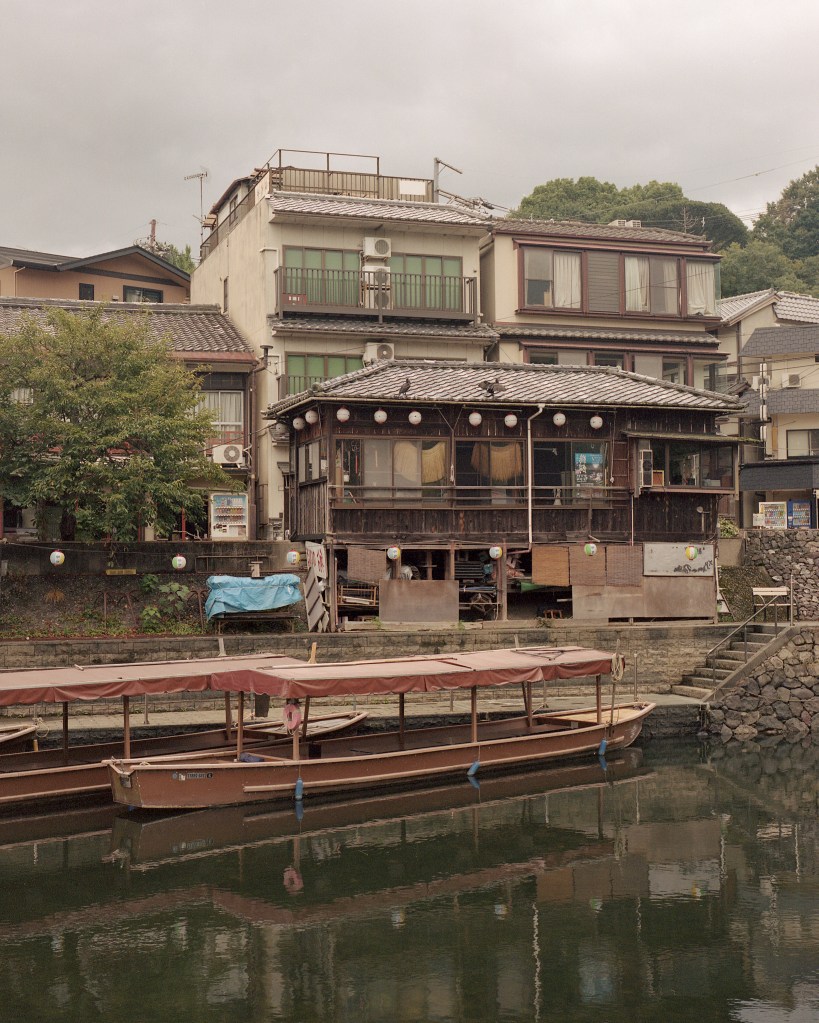
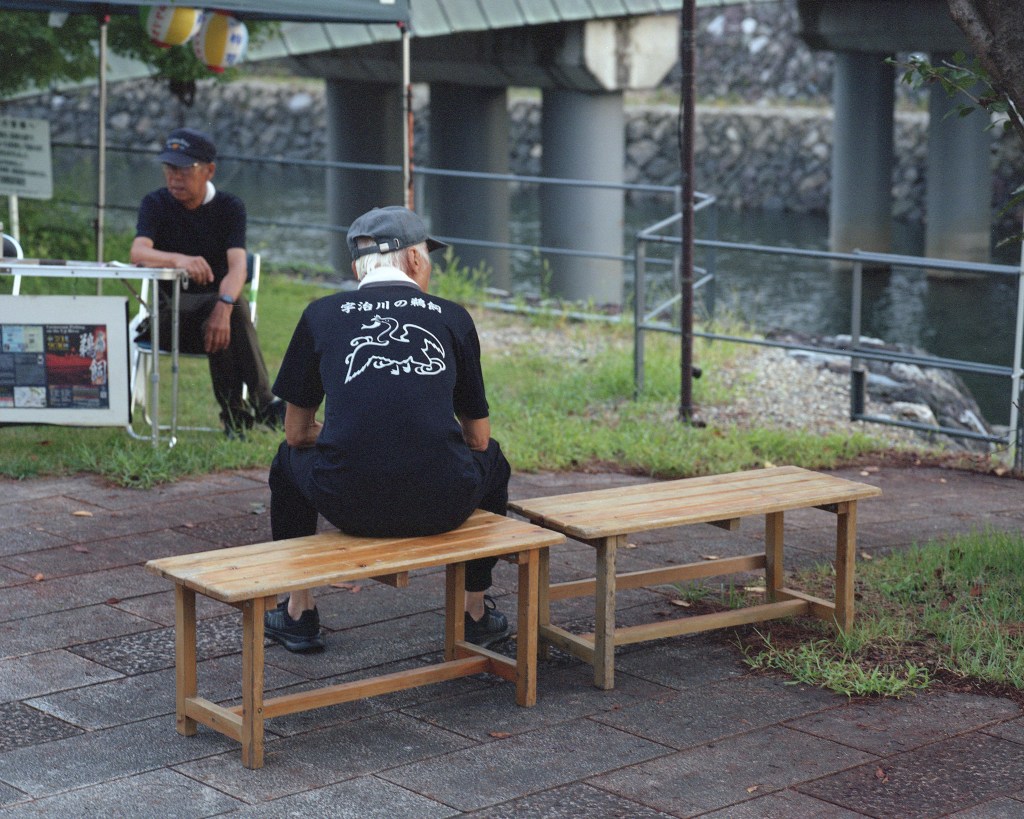
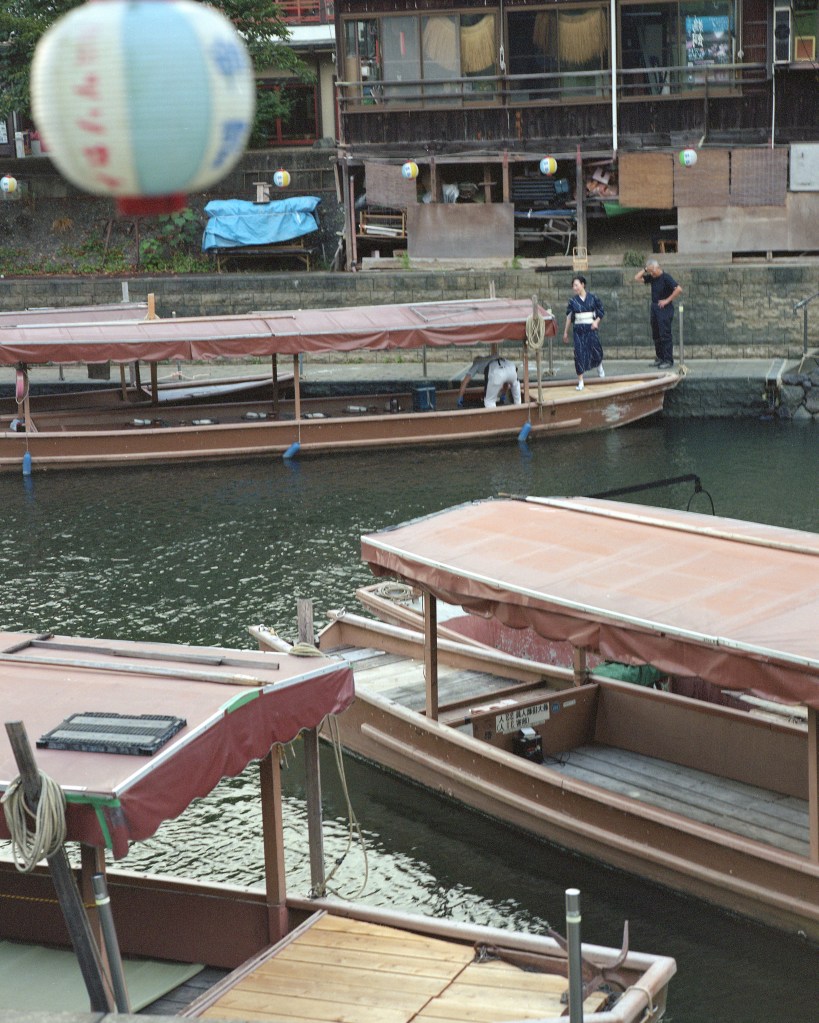
Fu importata dalla Cina più di 1300 anni fa ed è molto diffusa ancora oggi lungo il fiume Nagara nella prefettura di Gifu, e in forma minore anche a Uji e ad Arashiyama, poco distanti da Kyoto.
A Gifu i pescatori governano una dozzina di cormorani, e sono tutti discendenti dalle famiglie che fino alla restaurazione Meji praticavano la pesca su mandato dell’imperatore. A Uji sono solo tre i pescatori in attività, due delle quali sono donne. Indossano la divisa tradizionale composta da un cappello floscio (Kazaore boshi) e una gonna di paglia (Koshimino).
Per scoprire di più sul rapporto tra il popolo giapponese e le specie animali abbiamo assistito all’ukai sia a Gifu che a Uji.
Come per i tori di Ojiya, addestrati per affrontarsi in incontri di sumo animale, anche qui è difficile definire se si tratta di sfruttamento al fine di intrattenimento o esaltazione delle unicità della specie, venerata a livello spirituale e con genuina ammirazione.
Nella cultura giapponese, dalle filosofie religiose fino agli anime passando per le istituzioni, è evidente una tendenza a porre le specie animali come parte attiva nel dialogo delle cose umane. Basti pensare che le prefetture e le città spesso utilizzano un animale dall’aspetto antropomorfo come mascotte (Yuru Chara) per promuovere il territorio (Kumamon la più redditizia del paese e Chiitan la più “virale”). Nella cultura pop di anime e manga sono infiniti i personaggi animali diventati icone globali proprio per il modo di esaltarne i tratti “umani” (da Doraemon a Totoro fino ai Pokemon). Gli animali hanno ispirato artisti di ogni generazione in modi a volte inattesi (le illustrazione erotiche di Hokusai che immaginano uomini e animali in contorti amplessi o i serafici cani di Yoshitomo Nara). Il cane Hachiko, il mostruoso Godzilla, i cervi di Nara, i cat cafe, i macachi che si rilassano nelle acque termali, le carpe che decorano gli stagni dei giardini privati, le gru ricamate sui kimono, Hello Kitty e moltissime altre sono le manifestazioni di questa straordinaria ossessione e celebrazione del mondo animale nella cultura giapponese. A diffondere il rispetto nei confronti degli animali sono stati la filosofia scintoista e il buddismo che per secoli hanno insegnato a onorare tutte le forme di vita.
Nel “Nihon mukashi banashi” (vecchi racconti del Giappone) ci sono 42 storie in cui uomini si trasformano in animali e 92 in cui animali si trasformano in umani. (Nella controparte europea “Le Favole dei fratelli Grimm” solo sei storie parlano di animali che diventano uomini e lo fanno sempre evocando la magia come forza propulsiva).
↓
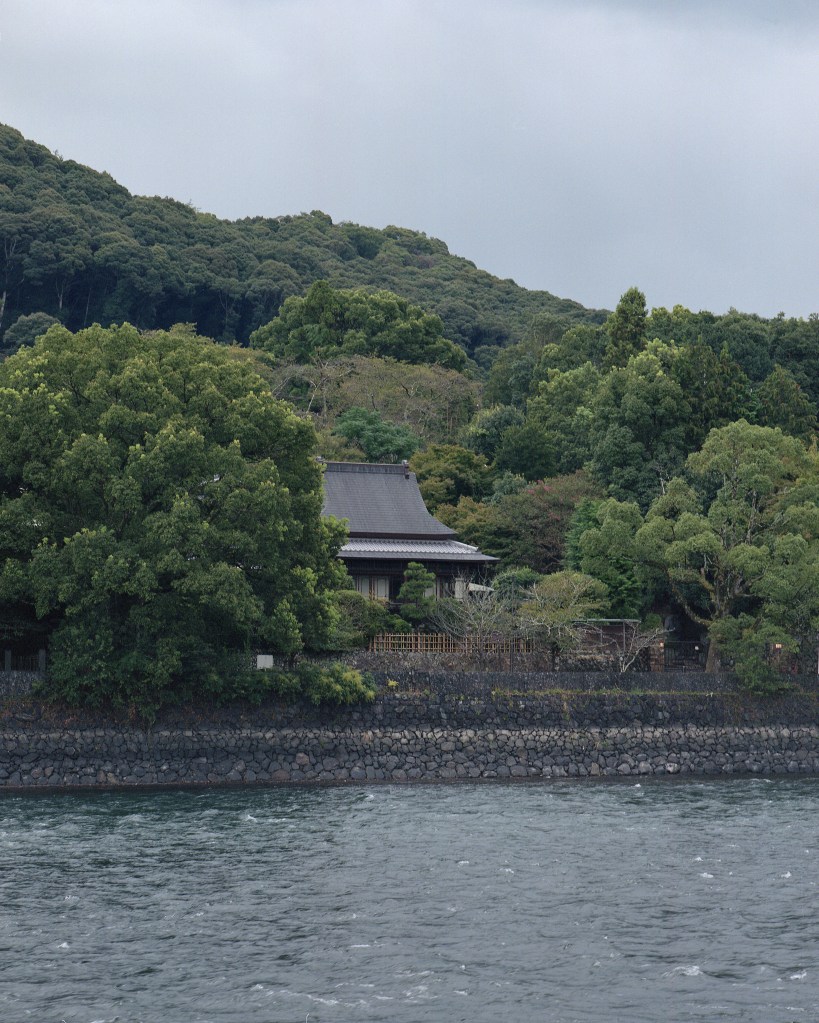

Per secoli il popolo giapponese non ha mangiato carne animale e forse questo ha contribuito a considerarli esseri senzienti al pari dell’uomo.
La carne divenne parte regolare della dieta giapponese solo dopo il terremoto del Kanto nel 1923, quando il paese ricevette aiuti da diversi stati tra cui la carne in scatola distribuita dalla marina militare statunitense. Nonostante il divieto di mangiare carne del 675 fosse stato abrogato definitivamente nel 1868, molti giapponesi consideravano ancora la carne con un alimento “sporco e maleodorante”.
Forse quindi, nel complesso intreccio di ruoli tra umani e animali, usare un volatile per pescare non è considerato sfruttamento ma una collaborazione di talenti.
A Gifu, quando assistiamo per la prima volta ad una sessione di ukai, la struttura che gestisce il flusso copioso di turisti è ben rodata e si ha la sensazione di prendere parte ad uno spettacolo da parchi divertimento. A Uji al contrario si respira un’aria più semplice, genuina. I volontari che accolgono i turisti e guidano le imbarcazioni sono tutti sorridenti pensionati della zona. Uno di loro, incuriosito dalla macchina fotografica, mi chiede da dove vengo. Nasce una chiacchierata confusa in cui mescoliamo inglese e giapponese, ridendo spesso per mascherare l’imbarazzo.
↓
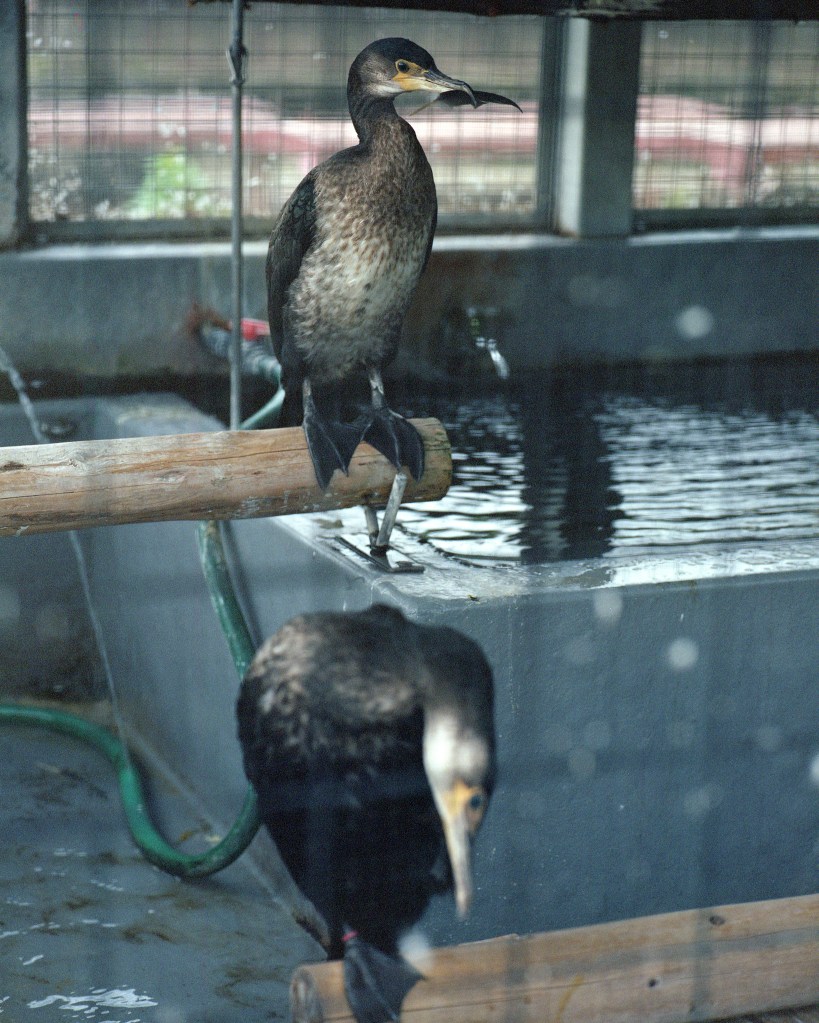
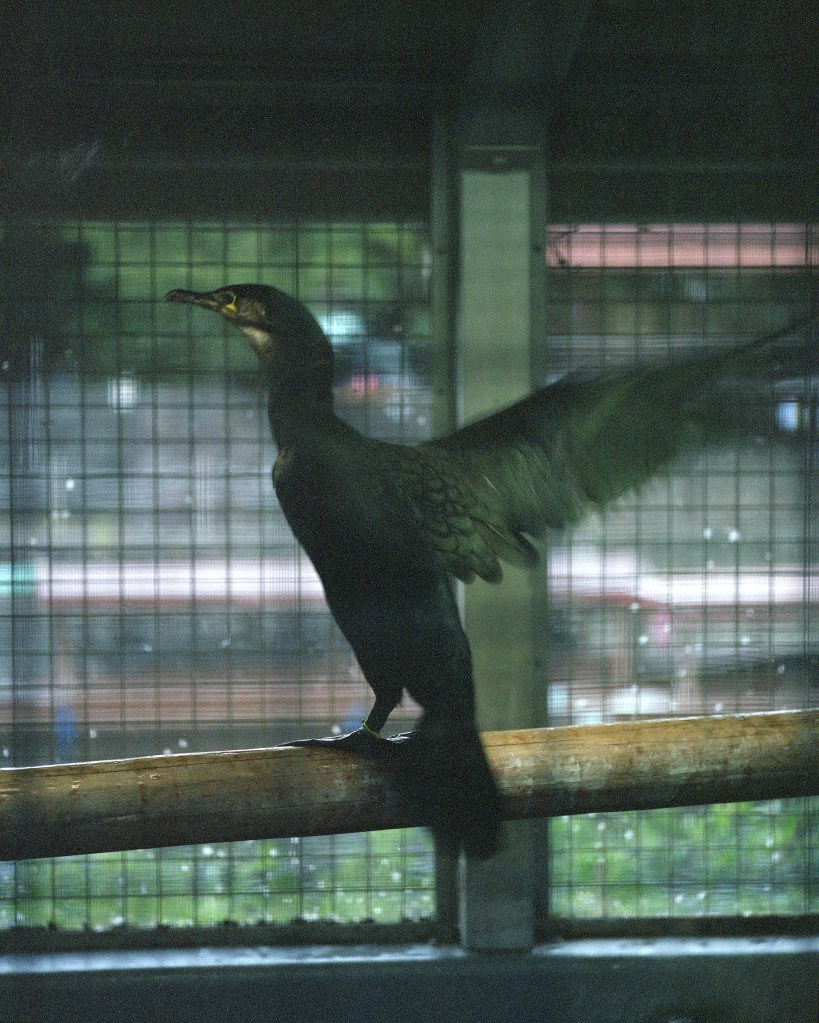
Qui sono l’unico occidentale a prendere parte all’unica dimostrazione del giorno, che inizia alle 19:30 e si conclude dopo un’ora. Prima di imbarcarci osservo una delle due pescatrici selezionare i cormorani per la battuta di caccia. Dopo averne pulito la voliera e le vasche, utilizza dei cesti divisi in due, in cui inserisce due esemplari per trasportarli sulla barca. La ragazza non affretta il processo, li accarezza uno a uno, alcuni sembrano richiamarne l’attenzione poggiando il becco su di lei in cambio di una carezza sul muso. Quando uno di loro non vuole entrare nel cesto, sbattendo le ali per protesta, lei non forza l’animale e lo rilascia cercando tra gli altri un volontario.
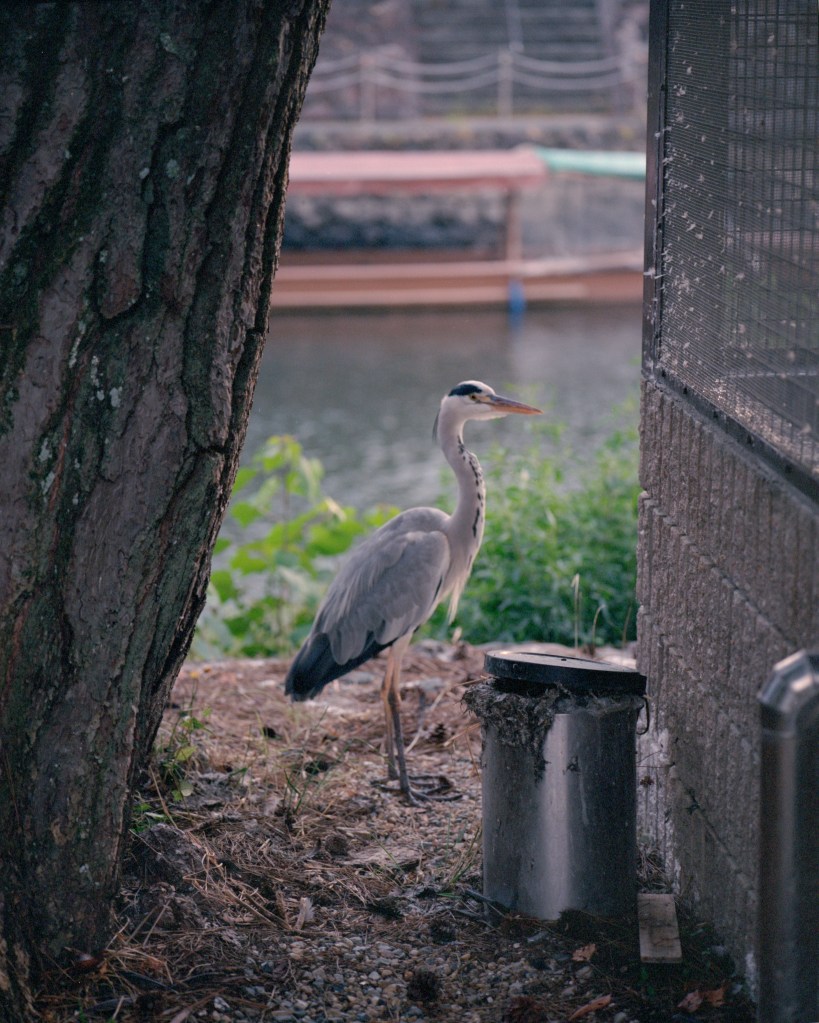
Mentre osservo la scena un airone si avvicina alla voliera, attirato dai pesci che l’addestratrice lancia al suo esercito di cormorani. Tra i due è ovvio che quello che sta fuori è nel posto giusto ma mi chiedo se il rapporto tra i cormorani e lei non possa almeno in parte contentare anche loro.
Mentre lei accarezza il muso di un esemplare che le preme il cranio sul ventre incrocio il suo sguardo. Dentro ci vedo il mio riflesso e penso alle leggende di uomini intrappolati nel corpo di animali, e al loro ruolo ambiguo di ammonitori e oppressi.
English Version
The boat stops in the middle of the river, where the bend slows the current. The helmsman drops the small anchor and parks behind two identical boats. On each there are about twenty onlookers, patiently waiting in silence for the start of the show. The sun has almost disappeared beyond the horizon. I try to guess what the best position will be to photograph everything, while I stretch and fold my legs looking for a more comfortable position.
The eyes are still adapting to the darkness that quickly made the space around a confusing mix of blue when out of nowhere a flame flows alongside us. A fireball flies across the surface of the water, scattering sparks that go out in their reflection. it is the brazier used to practice ukai, an ancient fishing technique that uses cormorants instead of nets. The boat on which it is fixed is piloted by two men but the ones who carry out the feat, every day for six months of the year, are two young girls, the only ones in the whole country to practice the profession – yet another one exclusively for men. The two take turns at the leash to tame the half-dozen birds, known as sea crows. They splash around in excitement. Under the illusion that the fish they dive into will end up in their belly. The rope that keeps them close to the boat tightens every time one of them re-emerges from the river. The girl on board with a decisive blow brings the specimen back on board, squeezes the bird’s neck making it spit out the freshly caught ayu fish (Plecoglossus altivelis). The cormorant does not realize what has just happened and is immediately thrown back into the water where it returns to dive with the same enthusiasm.
The boat (ukaibune) makes two turns around those of the spectators, the show lasts half an hour and the catch is small. Today the ukai technique remains a tourist attraction that keeps alive a thousand-year-old tradition, once it was a common practice in various areas of Japan. It was imported from China more than 1300 years ago and is still widespread today along the Nagara river in Gifu prefecture, as well as in a smaller form also in Uji and Arashiyama, not far from Kyoto. In Gifu the fishermen govern a dozen cormorants, and they are all descendants of the families who practiced fishing under the emperor’s mandate until the Meji restoration. In Uji there are only three active fishermen, two of whom are women. They wear the traditional uniform consisting of a floppy hat (Kazaore boshi) and a straw skirt (Koshimino). To find out more about the relationship between Japanese people and animal species we attended Ukai in both Gifu and Uji. As with the Ojiya bulls, trained to face each other in animal sumo matches, here too it is difficult to define whether it is exploitation for the purpose of entertainment or exaltation of the uniqueness of the species, venerated on a spiritual level and with genuine admiration.
↓

In Japanese culture, from religious philosophies to anime and institutions, there is an evident tendency to place animal species as an active part in the dialogue of human affairs. Suffice it to say that prefectures and cities often use an anthropomorphic-looking animal as a mascot (Yuru Chara) to promote the territory (Kumamoto the most profitable in the country and Chiitan the most “viral”). In the pop culture of anime and manga, there are countless animal characters that have become global icons precisely because of the way they enhance their “human” traits (from Doraemon to Totoro to Pokemon). Animals have inspired artists of every generation in sometimes unexpected ways (Hokusai’s erotic illustrations that imagine men and animals in contorted embraces or Yoshitomo Nara’s seraphic dogs). The dog Hachiko, the monstrous Godzilla, the deer of Nara, the cat cafes, the macaques relaxing in the thermal waters, the carp decorating the ponds of private gardens, the cranes embroidered on kimonos, Hello Kitty and many others are the manifestations of this extraordinary obsession and celebration of the animal world in Japanese culture. Shinto philosophy and Buddhism have spread respect for non-human life forms and for centuries have taught respect for all forms of life. In the “Nihon mukashi banashi” (old tales of Japan) there are 42 stories in which men transform into animals and 92 in which animals transform into humans. (In the European counterpart of the “Fables of the Brothers Grimm” only six stories talk about animals becoming men and they always do so by evoking magic as a driving force).
For centuries the Japanese people did not eat animal meat and perhaps this also contributed to a growing sense of respect for animal life and to consider them sentient beings. Meat became a regular part of the Japanese diet only after the Kanto earthquake in 1923, when the country received aid from several states including canned meat distributed by the US Navy. Although the meat-eating ban of 675 was finally repealed in 1868, many Japanese still considered meat to be a “dirty and smelly” food. Perhaps therefore, in the complex interweaving of roles between humans and animals, using a bird to fish is not considered exploitation but a collaboration of talents.
In Gifu, when we witness a Ukai session for the first time, the structure that manages the copious flow of tourists is well established and one has the feeling of taking part in an amusement park show. In Uji, on the other hand, there is a simpler, more genuine atmosphere. The volunteers who welcome tourists and guide the boats are all smiling pensioners from the area. One of them, curious about the camera, asks me where I come from. A confused chat arises in which we mix English and Japanese, often laughing to mask the embarrassment. Here I am the only Westerner to take part in the only demonstration of the day, which starts at 7.30pm and ends after an hour. Before boarding I observe one of the two fisherwomen selecting the cormorants for the hunting trip. After cleaning the aviary and the tanks, she uses baskets divided into two, in which she inserts two specimens to transport them on the boat. The girl doesn’t rush the process, she caresses them one by one, some seem to draw her attention by placing their beaks on her in exchange for a caress on the muzzle. When one of them does not want to enter the basket, flapping its wings in protest, she does not force the animal and releases it, looking for a volunteer among the others. While I observe the scene, a heron approaches the aviary, attracted by the fish that the trainer throws to her army of cormorants. Between the two it is obvious that the one who is outside is in the right place but I wonder if the relationship between the cormorants and her cannot at least partially satisfy them too. While she caresses the muzzle of a specimen that presses its skull against her belly, I meet its gaze. I see my reflection inside and think of the legends of men trapped in the bodies of animals, and their ambiguous role as warners and oppressed.
 Nipponia Magazine