
Yui, Shizuoka Prefecture –
Mi affaccio sulla terrazza del Mt. Fuji World Heritage Centre, davanti a me un piccolo piedistallo sostiene una foto del panorama in un giorno di sole. Alzo gli occhi e si vede soltanto una fitta coltre di nuvole grigie. Inspiro l’aria calda e umida. Inizia a piovere e penso che non ho nemmeno un ombrello con me. Rientro al museo nella sala dedicata alle foto più belle del monte che ho alle spalle e che non sono riuscito a vedere. Faccio il giro della stanza guardando come cambia il paesaggio durante le stagioni nelle foto.
La guida, una sorridente ragazza giapponese, si avvicina a me. Mi chiede da dove vengo, le ripondo che sono italiano. Riesce a stento a trattenere un gridolino che smorza sibilando un “soooo” sorpreso ( una sorta di “ah è cosi-davvero”, uno di quei intercalari giapponesi che cambiano significato a seconda dell’intonazione) e si inchina appena raccontando che ha visitato I’Italia qualche anno prima. Le chiedo dove è stata e mi elenca tutte le principali città italiane da nord a sud, comprese Alberello e Torino. Le chiedo quanto tempo è stata nel paese, mi risponde che ci è stata dieci giorni. “Hai preso molti treni!” le dico nel mio giapponese incerto. “basu” mi risponde. Per un attimo avevo sovrapposto l’efficenza ferroviaria nipponica con la scarsa italiana. Una cosa che l’ha colpita particolarmente, oltre alle ovvie bellezze storiche e architettoniche, sono stati gli autogrill. Mi domando se ho capito bene e per un attimo mi dimentico di sorridere facendola forse sentire a disagio perché incalza nuovamente lodando le bellezze di Venezia (non il pesce) e Roma oltre a quanto buona sia la pasta. La ringrazio indietreggiando verso la stanza successiva dove sono esposti campioni di pietra lavica estratti da diverse profondità. La guida mi invita a leggere le didascalie e mi augura una buona visita congedandosi con un “buonasera” dalla perfetta erre arricciata. Le rispondo “buonasera” salutandola con la mano. Qui sono le dieci del mattino, in Italia però è notte, non ha sbagliato – penso. →
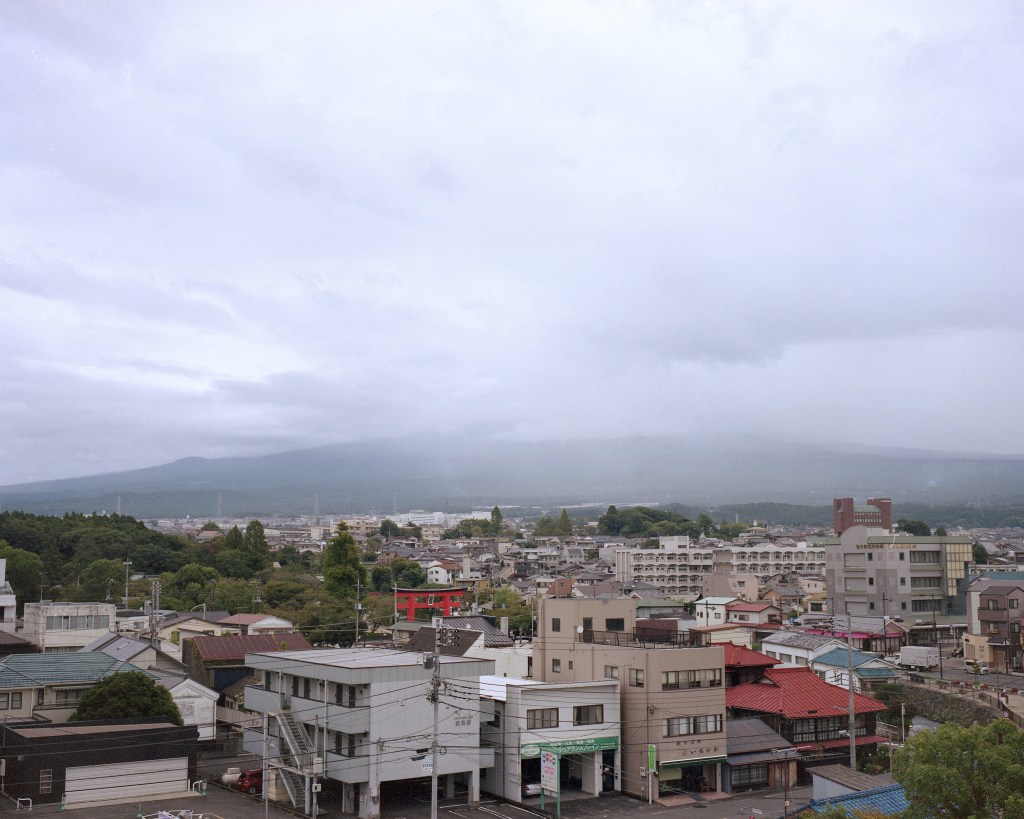
Sullo smartphone aggiorno la pagina del sito che trasmette in diretta le immagini di una decina di webcam puntate sul monte Fuji da altrettanti posizioni tutt’attorno. Nubi ovunque.
Non c’è possibilità che il cielo schiarisca e le nuvole scoprano il profilo del monte anche solo parzialmente, ma non posso darmi per vinto – penso – sono dall’altra parte del mondo per catturare immagini di questo paese e nella collezione mi manca quella che forse è la più simbolica. Sarebbe come tornare da Parigi senza aver fotografato la torre Eiffel. Confido che chiunque governi le forze dell’universo mi stia solo mettendo alla prova e se sarò tenace mi ripagherà con il tramonto più struggente si possa desiderare soffiando via le nuvole e rivelando il Fuji blu staccarsi da un cielo arancione. Devo solo aspettare. ↓
Esco dal museo e mi rifugio in un konbini, ho bisogno di un ombrello. Compro il più economico insieme a una crocchetta di patate che mangio nei due passi che separano le casse dall’uscita del negozio. Fuori sfilo l’ombrello dall’astuccio e lo apro. É molto piccolo. Sull’etichetta che penzola dal manico riesco a decifrare qualcosa riguardo ai raggi UV e al sole. Appena sono sotto l’acqua ho la conferma di aver comprato un ombrellino da sole, di quelli che le donne giapponesi hanno sempre nella borsetta d’estate per schermare i raggi solari, non paghe degli strati di tessuto traspirante anti UV che solitamente coprono ogni angolo del loro corpo. La pioggia filtra in qualche punto della coperta, mi avvio comunque verso la stazione, devo decidere come occupare il resto del giorno in attesa del momento in cui il monte Fuji tornerà visibile. Decido di proseguire verso Shimizu, dove alloggio, percorrendo il sentiero Takeido fino al Satta Pass, da dove forse riuscirò a scattare la foto. La strada passa attraverso una manciata di paesini tutti uguali, in giro solo qualche macchina, pochi passanti. Il sentiero Takeido collega Tokyo a Kyoto e un tempo era la via ufficiale, assieme alla Nakasendo, di collegamento tra le due città. ↓
Non riesco a fotografare, le nuvole che hanno coperto il Fuji sono le stesse che hanno velato il mio entusiasmo. Parlo da solo, a volte a voce alta, chiedendomi cosa avrei fatto se fossi arrivato la mattina e avessi trovato il monte ben visibile. Dopo averlo fotografato cosa avrei fatto? Non ci avevo pensato bene, ero arrivato la sera prima a Shizuoka sapendo che le previsioni meteo non erano delle migliori per i prossimi tre giorni. Avevo deciso di provare comunque da avvicinarmi a un punto panoramico nell’eventualità ci fosse stata una schiarita. Ci avrei provato per tutti e tre i giorni fino al momento di ripartire per la tappa successiva. In quel momento, davanti all’evidenza dell’ostacolo che ho davanti, capisco è stata un’idea stupida a cui però posso ancora rimediare. Avevo davvero bisogno di fotografare la stessa montagna come centinaia di persone ogni giorno? Non proprio. Rimuovo il tappo alla lente della Mamiya e inizio a guardarmi attorno attraverso il mirino della macchina. ↓
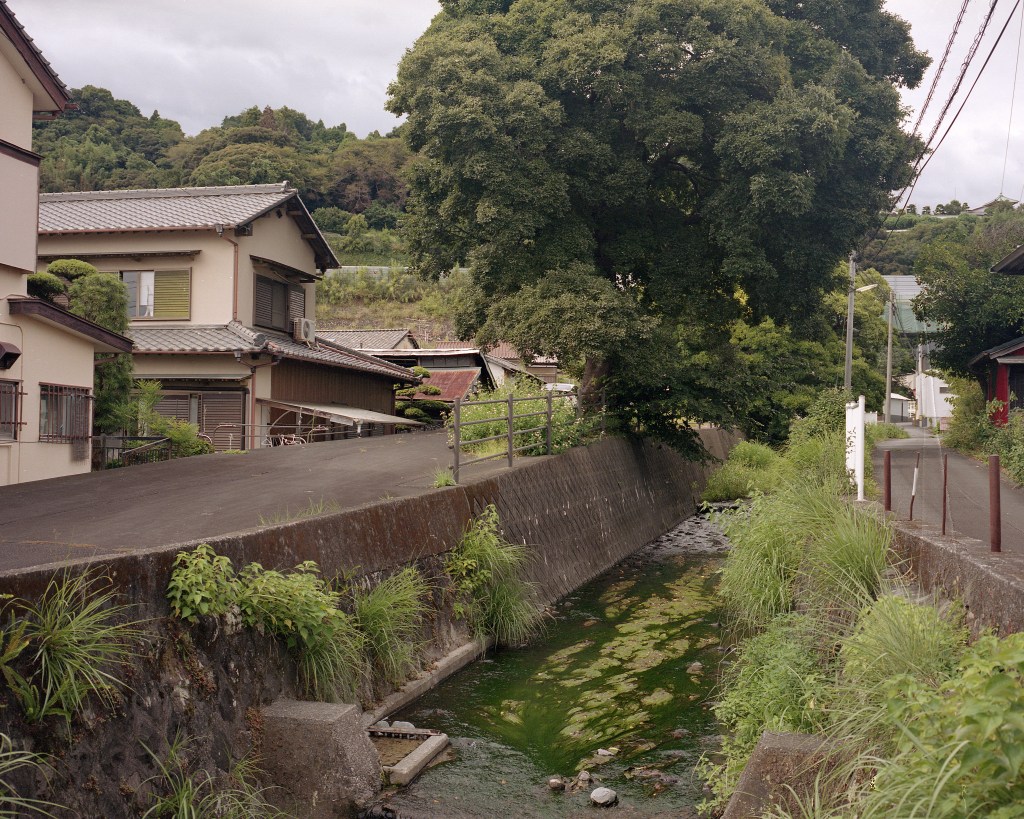
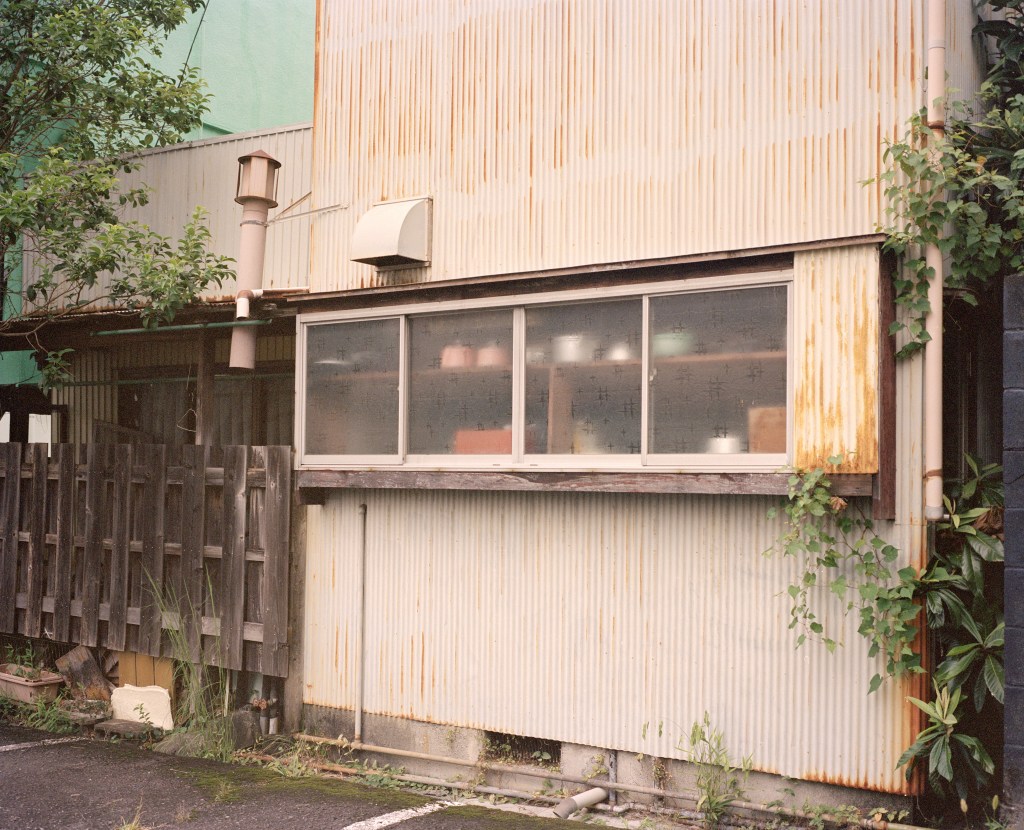
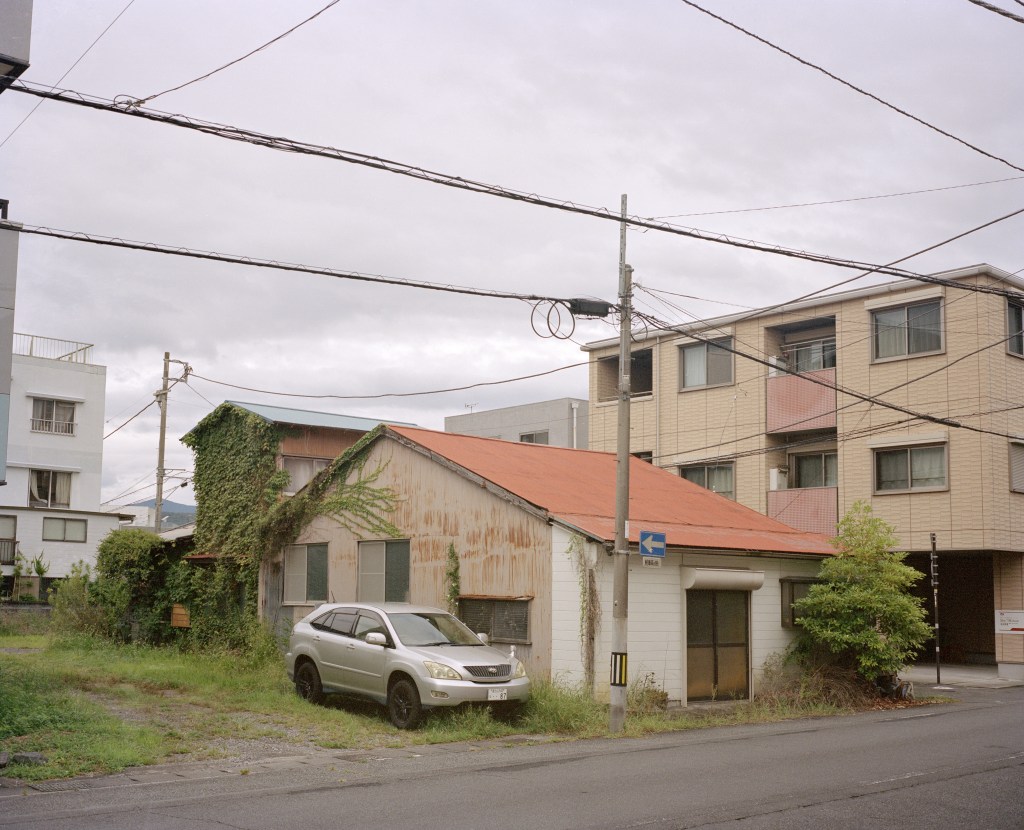
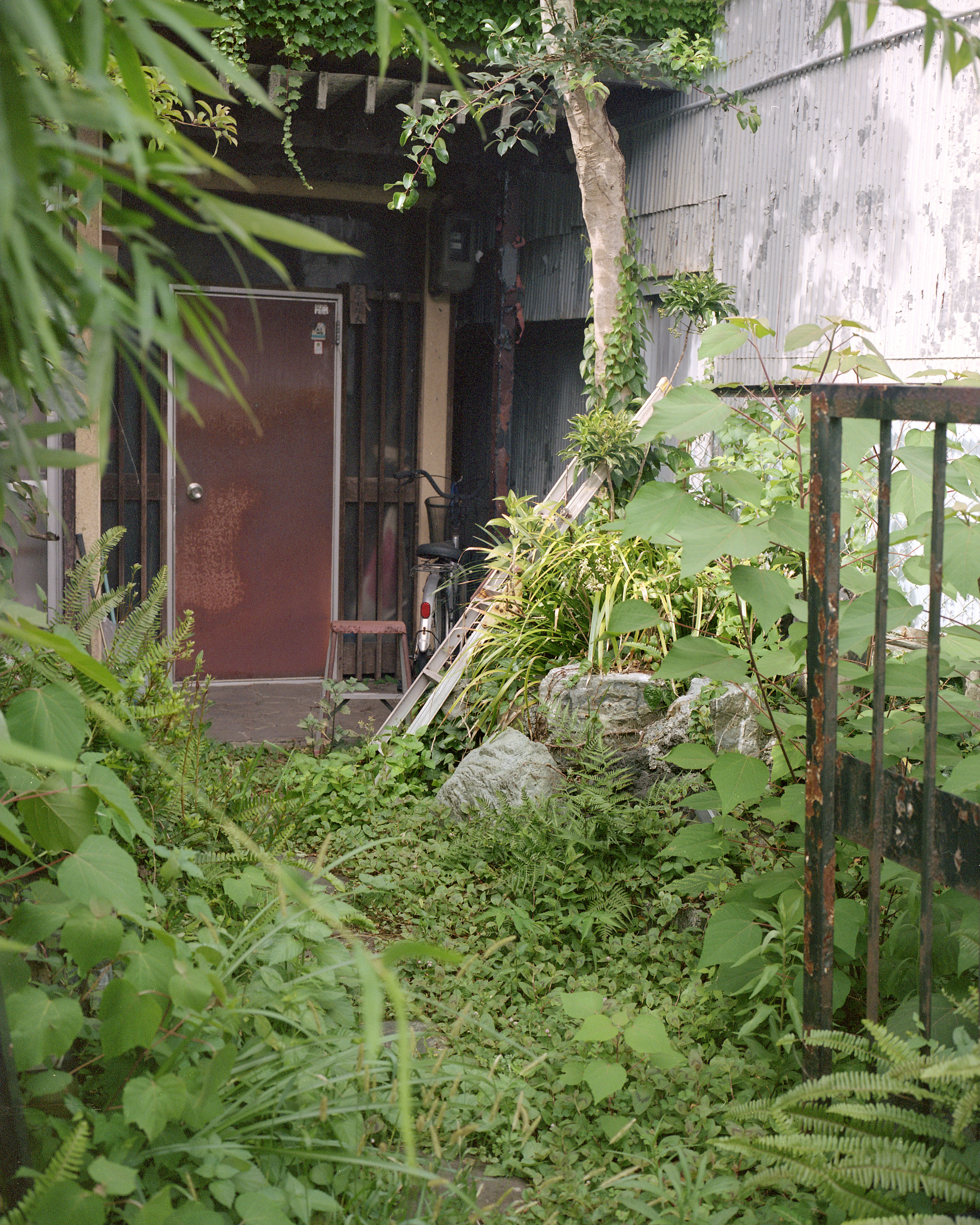
Riesco ad essere nuovamente presente, dimentico quello che speravo avrei trovato quel giorno e mi lascio andare alla deriva. I soggetti degli scatti che realizzo si manifestano uno dopo l’altro senza che io debba cercarli. Premo sull’otturatore inquadrando qualche casa abbandonata su cui la vegetazione ha ridisegnato i profili, auto dai colori tenui ferme in insoliti spazi, una fila di pentole dietro il vetro opaco di una finestra. Mi arrampico su una ripida scalinata di cemento. I gradini sono meno profondi della pianta del mio piede per cui cammino sulle punte. Portano alla cima di una collinetta su cui è costruito un piccolo altare. Non appena mi addentro oltre la scala un cane inizia ad abbaiare rabbioso. É il primo che incontro di quella stazza in Giappone, è sicuramente un cane da guardia. Il bestione inizia a saltare cercando di scavalcare la rete che mi separa da lui, torno sui miei passi. Non ho ancora incontrato un’essere umano da quando ho lasciato il museo un’ora fa. ↓

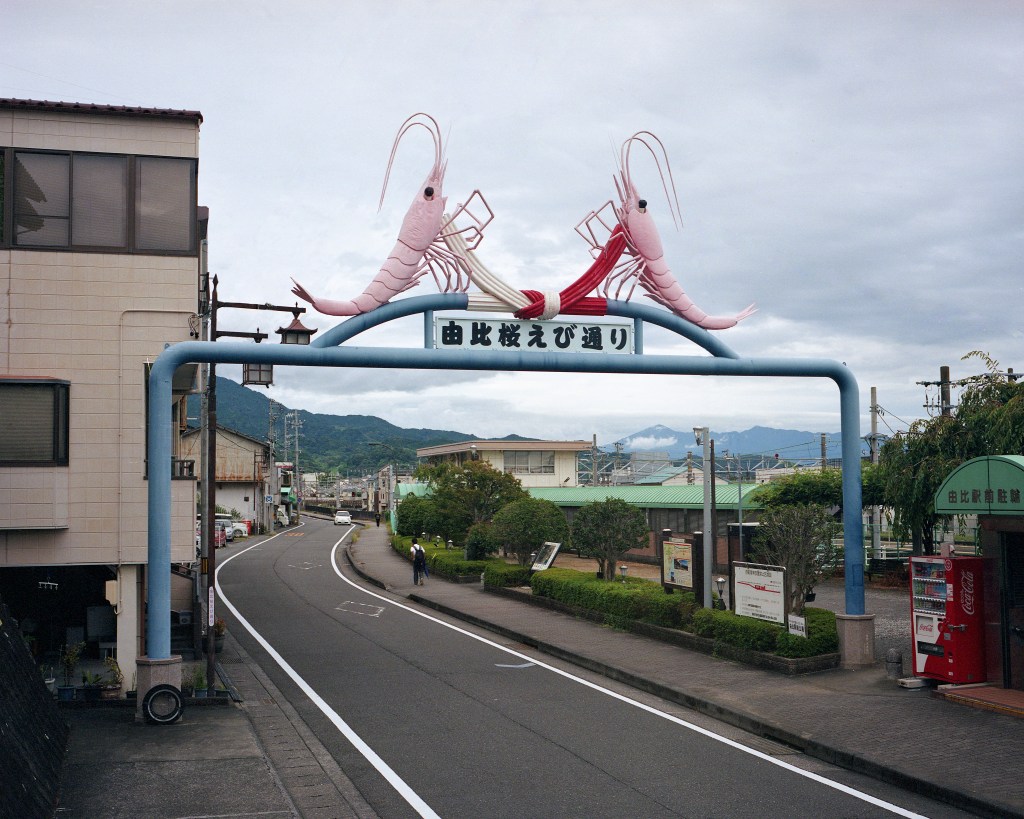
Arrivo a Yui, pochi metri prima della stazione troneggia un’enorme scultura che scavalca la strada principale e che ritrae due enormi gamberi al di sopra di un insegna che recita “ La Via dei Gamberetti Rosa di Yui “.
Sorrido, non sapevo dell’esistenza di questo posto e non l’avrei scovato se il ben più famoso Fuji si fosse mostrato quel giorno. Penso a quante volte ho rincorso un’obiettivo senza rendermi conto di quant’altro avevo attorno. A volte fatica e frustrazione annebbiano la capacità di sentire ciò di cui abbiamo davvero bisogno.
Scoprirò solo al mio ritorno che alcuni delle immagini che ho realizzato quel giorno sono le migliori di tutti il viaggio. Fotografare su pellicola permette di concentrare tutte le energie nell’osservare, fidandosi del proprio intuito nell’esporre correttamente. Di solito scatto una sola fotografia del soggetto che attira la mia attenzione. Prima di premere sull’otturatore ci giro tutto attorno, torvo il punto di vista che mi convince di più poi, nel mirino della macchina, seleziono la porzione di mondo che voglio prelevare e scatto. É un processo che può diventare meditativo se si cavalca l’onda dell’ispirazione creativa, specialmente quando la luce è giusta. ↓
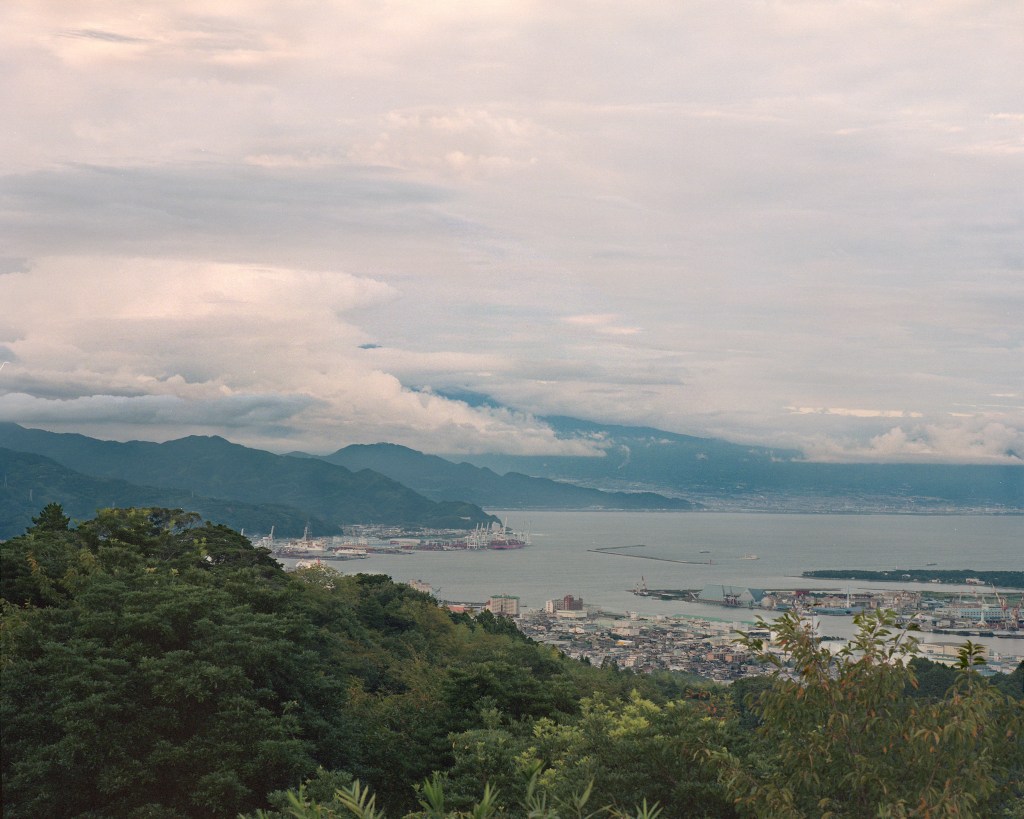
Ritorno a Shimizu, appagato dalle immagini che ho realizzato. Mi fermo al porto a gustarmi un’enorme ciotola di riso e pesce crudo. Il locale si affaccia sulla baia da cui posso vedere il cielo di nuvole che copre il Fuji. In una giornata di sole avrei collezionato decine di punti di vista sul vulcano, invece continua a nascondersi quasi a dirmi di non badare a lui ma di guardare altrove. Salgo su un taxi, ho camminato troppo ma ho ancora voglia di fare foto. Chiedo all’autista di portarmi a Nihondaira, la collina che separa Shizuoka e Shimizu, da cui si gode una vista a trecentosessanta gradi su entrambe le baie, oltre che sul monte Fuji. Sono le cinque del pomeriggio, gli ultimi visitatori se ne stanno andando. Sulla cima è costruita una passerella circolare da cui osservare il panorama. Punto la macchina fotografica sul Fuji che ancora non vuole mostrarsi, scatto lo stesso per ricordarmi di ora e qui.
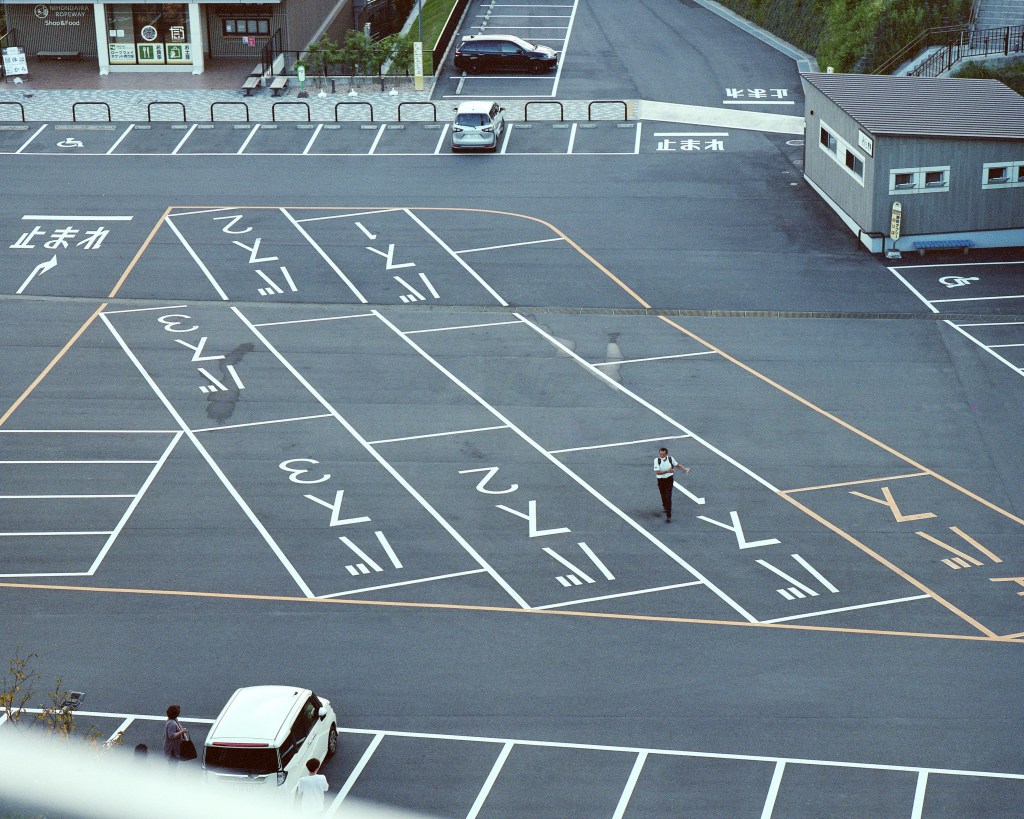
Guardo le nuvole attorcigliarsi su loro stesse e mantenere la posizione, il vento spinge da tutte le direzioni e dal mare sembra stia arrivando una tempesta. Respiro l’aria elettrica, sono da solo in cima alla collina e non so come tornare giù. La linea della cabinovia è chiusa, gli autobus sono tutti ripartiti e l’ultima corsa ha lasciato il parcheggio quando sono arrivato qui, di taxi non se ne vedono. Non importa penso, perché dovrei preoccuparmi di come andarmene da qui.
Mi accorgo di essere un pò più nuovo, la giornata è stata di quelle che provocano un lieve scostamento dell’io e lasciano intravedere quella che sarà la fase successiva. Inizia a piovere e a farsi buio. Sistemo la macchina fotografica nello zaino e prendo la strada che attraversa il bosco verso valle e scompare, con me, nel buio.
ENGLISH VERSION
I step out onto the terrace of the Mt. Fuji World Heritage Centre, a small pedestal in front of me holding a photo of the landscape on a sunny day. I look up, but all I see is a thick blanket of gray clouds. I breathe in the warm, humid air. It starts to rain, and I realize I don’t even have an umbrella with me. I retreat into the museum, into the room dedicated to the most beautiful photos of the mountain behind me that I haven’t been able to see. I walk around the room, observing how the landscape changes with the seasons in the photos. The guide, a smiling Japanese girl, approaches me. She asks where I’m from, and I reply that I’m Italian. She can barely contain a surprised exclamation, hissing a “soooo” in a sort of astonished manner (one of those Japanese interjections that changes meaning depending on the intonation), and she bows slightly, telling me she visited Italy a few years ago. I ask her where she went, and she lists off all the major Italian cities from north to south, including Alberobello and Turin. I ask her how long she stayed in the country, and she responds that she was there for ten days. “You took many trains!” I say in my uncertain Japanese. “Basu,” she replies. For a moment, I had juxtaposed the efficiency of Japanese railways with the lackluster Italian ones. One thing that particularly struck her, besides the obvious historical and architectural beauties, was the highway rest areas. I wonder if I understood correctly, and for a moment, I forget to smile, perhaps making her feel uncomfortable as she continues to praise the beauties of Venice (not the fish) and Rome, as well as how delicious the pasta is. I thank her, stepping back towards the next room where samples of lava stone extracted from various depths are displayed. The guide invites me to read the captions and wishes me a good visit, bidding farewell with a perfectly rolled “buonasera.” I reply, “buonasera,” waving to her. It’s ten in the morning here, but it’s night in Italy, she hasn’t made a mistake – I think.
On my smartphone, I refresh the page of the website streaming live images from about ten webcams pointed at Mount Fuji from various locations all around. Clouds everywhere. There’s no chance the sky will clear and the clouds will reveal even a partial view of the mountain, but I can’t give up – I think – I’m on the other side of the world to capture images of this country, and in my collection, I lack perhaps the most symbolic one. It would be like returning from Paris without having photographed the Eiffel Tower. I trust that whoever governs the forces of the universe is just testing me, and if I persevere, they will reward me with the most poignant sunset one could desire, blowing away the clouds and revealing the blue Fuji against an orange sky. I just have to wait.
I leave the museum and take refuge in a convenience store; I need an umbrella. I buy the cheapest one along with a croquette that I eat in the few steps separating the cash register from the store’s exit. Outside, I pull the umbrella out of its case and open it. It’s very small. On the label hanging from the handle, I manage to decipher something about UV rays and the sun. As soon as I’m under the rain, I confirm that I bought a parasol, one of those that Japanese women always have in their summer purses to shield themselves from the sun’s rays, not content with the layers of breathable UV-protective fabric that usually cover every inch of their bodies. The rain seeps through somewhere in the cover, but I still head towards the station; I have to decide how to spend the rest of the day while waiting for the moment when Mount Fuji will become visible again. I decide to continue towards Shimizu, where I’m staying, following the Takeido trail to the Satta Pass, where I might be able to take the photo. The road passes through a handful of identical villages, only a few cars, and few pedestrians around. The Takeido trail connects Tokyo to Kyoto and was once the official route, along with the Nakasendo, for traveling between the two cities. I can’t take photos; the clouds that covered Fuji are the same ones that veiled my enthusiasm. I talk to myself, sometimes out loud, wondering what I would have done if I had arrived in the morning and found the mountain clearly visible. After photographing it, what would I have done? I hadn’t thought it through; I had arrived in Shizuoka the night before, knowing that the weather forecast wasn’t the best for the next three days. I had decided to try anyway to get to a viewpoint in case there was a break in the weather. I would have tried for all three days until it was time to move on to the next stop. At that moment, faced with the evidence of the obstacle in front of me, I understand it was a foolish idea, but one I can still remedy. Did I really need to photograph the same mountain like hundreds of people do every day? Not really.
I remove the cap from the Mamiya lens and start looking around through the camera’s viewfinder. I manage to be present again, forgetting what I had hoped to find that day and letting myself drift. The subjects of the shots I take manifest themselves one after the other without my having to search for them. I press the shutter button, framing some abandoned houses whose outlines have been redrawn by vegetation, cars in soft colors parked in unusual spaces, a row of pots behind the frosted glass of a window. I climb a steep concrete staircase. The steps are shallower than the sole of my foot, so I walk on tiptoes. They lead to the top of a small hill where a small altar is built. As soon as I go beyond the stairs, a dog starts barking furiously. It’s the first one of that size that I encounter in Japan; it’s definitely a guard dog. The beast starts jumping, trying to climb over the fence that separates me from him, and I backtrack. I haven’t encountered a human being since I left the museum an hour ago.
I arrive in Yui; a few meters before the station, an enormous sculpture dominates the main road, depicting two huge shrimp above a sign that reads “The Pink Shrimp Road of Yui.” I smile; I didn’t know about this place, and I wouldn’t have found it if the much more famous Fuji had shown itself that day. I think about how many times I’ve chased an objective without realizing what else I had around me. Sometimes, effort and frustration cloud our ability to feel what we really need. I will only discover upon my return that some of the images I captured that day are the best of the whole trip. Shooting on film allows me to focus all my energies on observing, trusting my intuition to expose correctly. I usually take only one photograph of the subject that catches my attention. Before pressing the shutter, I walk all around it, finding the viewpoint that convinces me the most; then, through the camera’s viewfinder, I select the portion of the world I want to capture and shoot. It’s a process that can become meditative if you ride the wave of creative inspiration, especially when the light is right. I return to Shimizu, satisfied with the images I’ve taken. I stop at the port to enjoy a huge bowl of rice and raw fish. The place overlooks the bay from which I can see the cloud-covered Fuji. On a clear-sky day, I would have collected dozens of viewpoints of the volcano; instead, it continues to hide, almost telling me not to pay attention to it but to look elsewhere.
I get into a taxi; I’ve walked too much, but I still want to take photos. I ask the driver to take me to Nihondaira, a hill that separates Shizuoka and Shimizu, where you can enjoy a 360-degree view of both bays, as well as Mount Fuji. It’s five in the afternoon, the last visitors are leaving. On the top of the hill, there’s a circular walkway from which to observe the panorama. I point the camera at Fuji, which still doesn’t want to show itself; I take a picture anyway to remind myself of now and here. I watch the clouds twist around themselves and hold their position; the wind blows from all directions, and it seems like a storm is coming from the sea. I breathe in the electric air; I’m alone on top of the hill, and I don’t know how to get back down. The cable car line is closed; the buses have all left, and the last one left the parking lot when I arrived here; there are no taxis in sight. It doesn’t matter, I think, why should I worry about how to get out of here? I realize I’m a bit different now; the day has been one of those that cause a slight shift in the self and reveal what the next phase will be like. It starts to rain, and it gets dark. I pack the camera in my backpack and take the road that crosses the woods down the valley and disappears, with me, into the darkness.
 Nipponia Magazine
Una replica a “Lasciando indietro il Fuji – Leaving mt. Fuji behind”
Beautiful article and pictures