
Sakyo-ku, Kyoto Prefecture –
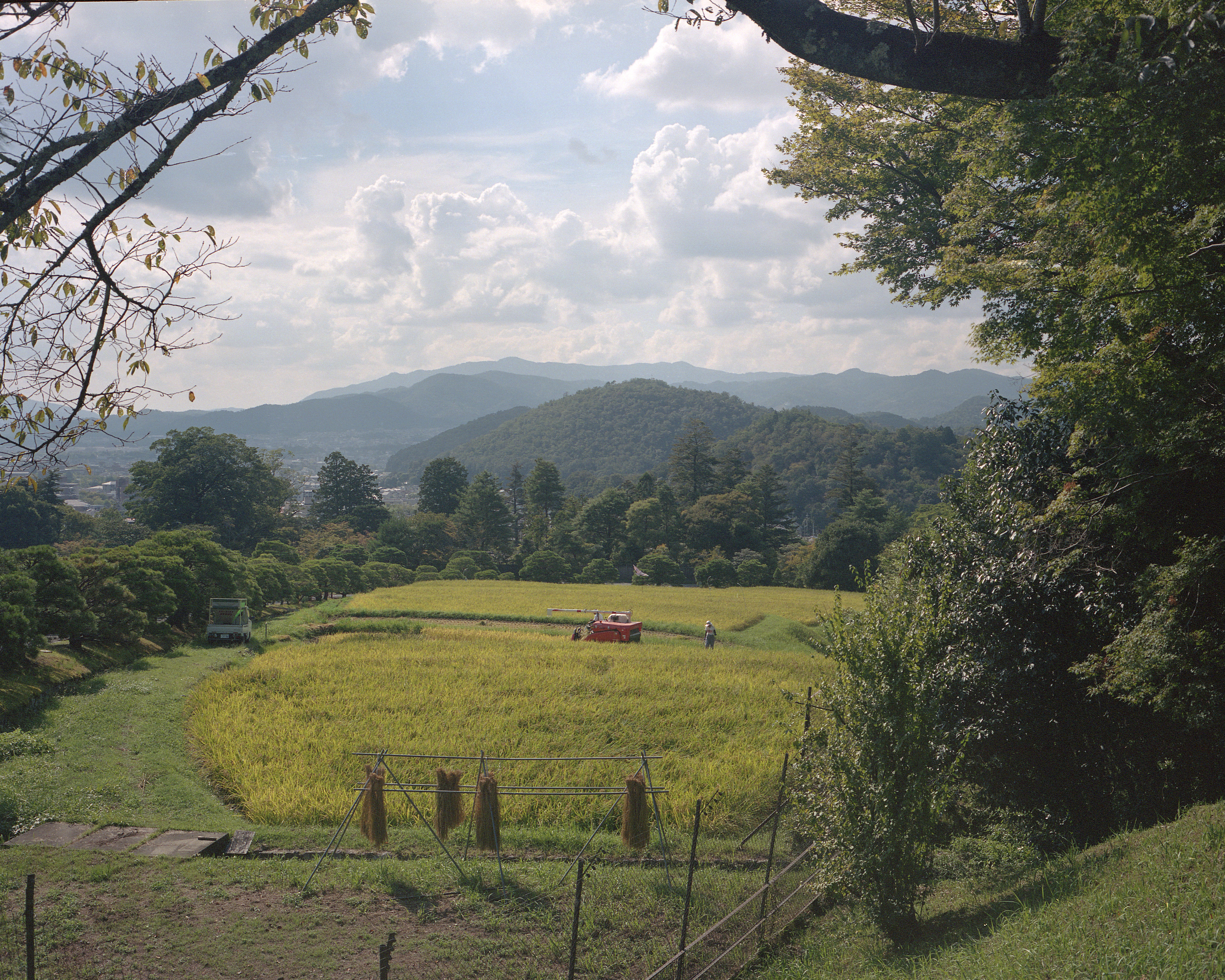
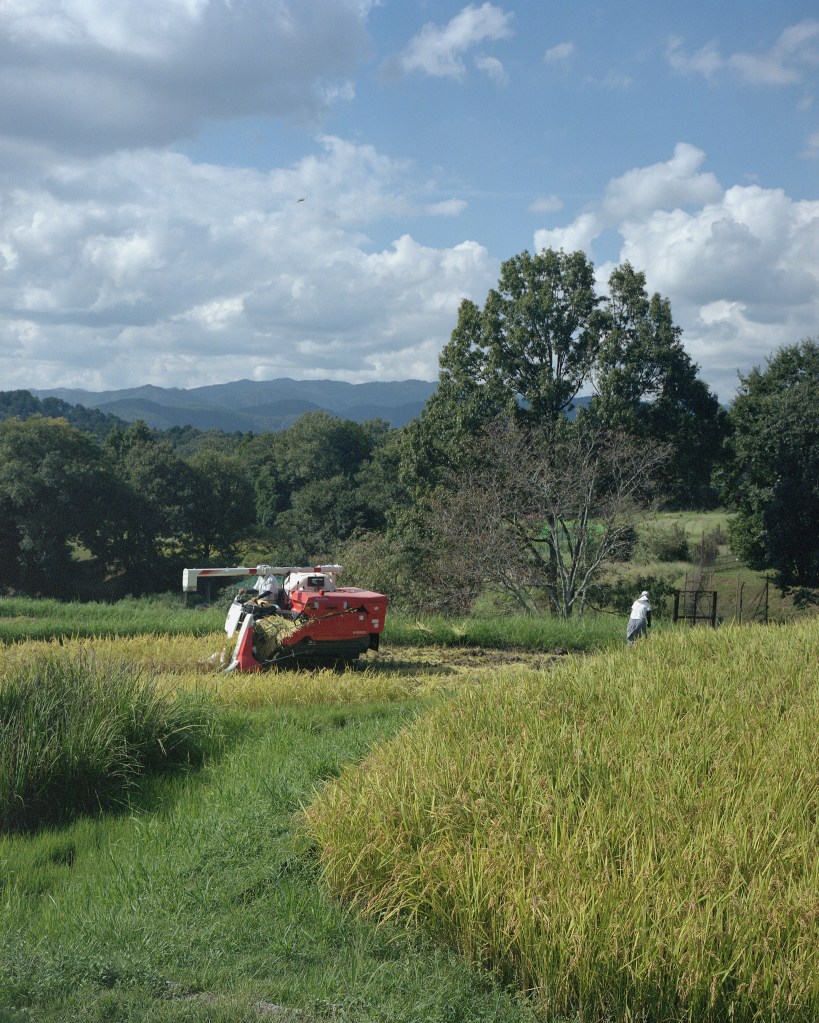
È il decimo giorno di settembre e a Kyoto il riso è pronto per essere raccolto. Le spighe hanno iniziato ad ingiallire e in tutta la periferia si muovono lente le mietitrici. Sono piccole macchine squadrate monoposto, con davanti una bocca che taglia i fusti e li risputa a mazzi. Agli argini dei campi i raccolti sono appesi a seccare. Lunghe file di spighe appese a testa in giù creano corridoi dorati, i cosiddetti hazakake.
Cammino senza meta, scelgo solo se girare a destra o sinistra ad ogni bivio. Cerco di mantenere il più del mio corpo all’ombra, nella spanna che proietta a terra il muro che cinge le case. La strada finisce e una fila di edifici blocca il passaggio. Tornare indietro significa aver sprecato tempo e significa venir meno a uno dei principi con cui viaggio in questa terra: mai vedere due volte la stessa cosa se ne posso vedere una sconosciuta. Tra due delle casette squadrate davanti a me vedo un passaggio, poche decine di centimetri appena. Mi ci infilo dentro.
Devo muovermi a piccoli passi con la spalla sinistra avanti. Se chiunque abiti qui aprisse ora la finestra si ritroverebbe la mia faccia a guardarvi dentro. La ghiaia a terra scoppietta ad ogni mio passo, scavalco il motore di un sistema di areazione, un annaffiatoio verde e un paio di ciabatte di plastica sbiadite. Con la mano destra faccio da scudo alla lente della Mamiya per evitare che sbatta contro qualsiasi sporgenza. Arrivato dall’altra parte mi ritrovo in un rettangolo di cemento al sole, due macchine parcheggiate ai lati opposti. Di fronte, a chiudere il parcheggio, si allunga una serra: una serie di archi di acciaio coperti da una plastica lattiginosa. In alcuni tratti è tesa fino a terra, in altri si alza mossa dal vento, sul davanti invece ne rimangono solo dei brandelli ingialliti. Mi avvicino. Un melone è appeso sghembo tra una rete di contenimento e un traliccio. Del resto della vegetazione non distinguo i frutti perché non ci sono. Esco da li.
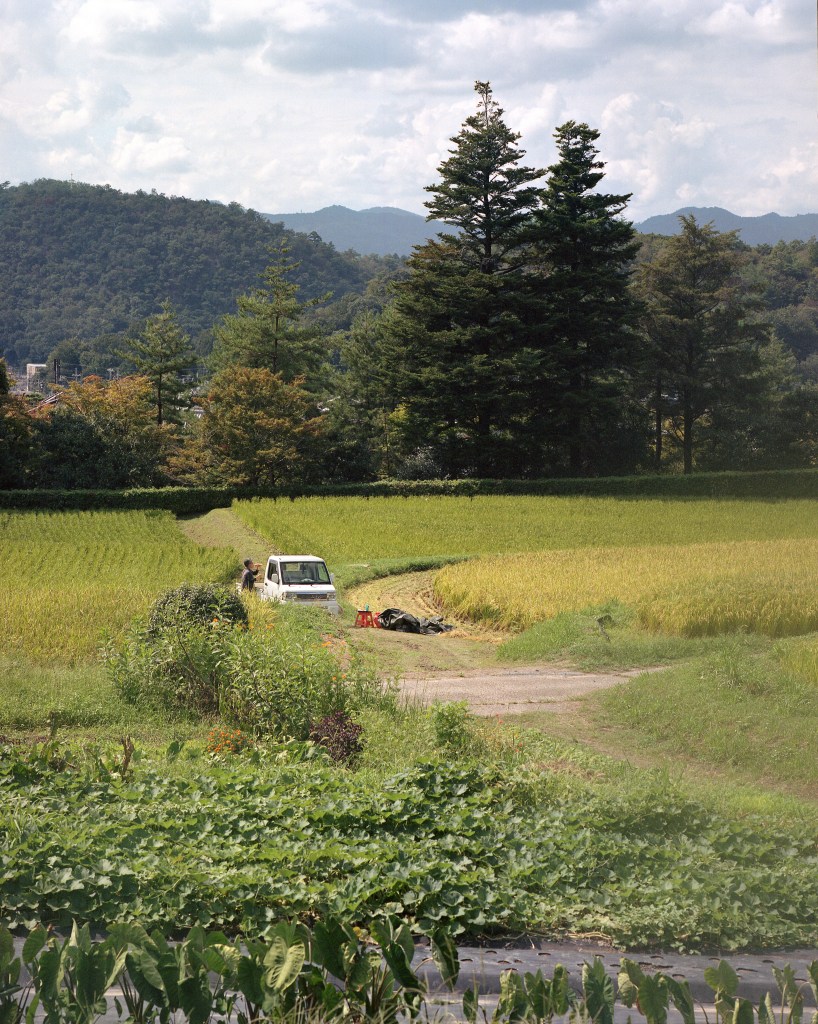
Le nuvole sono scivolate via, il cielo è alto più di prima. Più avanti la strada costeggia una risaia. In fondo alla strada scorgo un uomo seduto ad un tavolino, di quelli da campeggio che si possono ripiegare e mettere in auto. Mi avvicino, è seduto su una sedia anch’essa pieghevole e attorno è montato un parasole ancorato a terra con delle taniche piene d’acqua.

Alza lo sguardo e mi sorride. Ricambio e cerco di trovare un indizio che mi riveli il perché si trova li. Dietro di lui si alza un muro alto circa tre metri e un cancello socchiuso, a terra la segnaletica indica due direzioni opposte, entrata e uscita.
Sposto lo sguardo sul tavolo davanti a lui e subito mi porge uno degli opuscoli sibilando di seguito “Ticket?”. Sugakuin Imperial Villa – one of the Great masterpieces of Japanese gardening è il titolo dell’opuscolo. Senza distogliere lo sguardo dalle foto datate che ne illustrano i colori nelle quattro stagioni tiro fuori dalla tasca dei pantaloni due monete da cinquecento yen e un secondo dopo sono dentro.
Percorro un vialetto asfaltato fino ad una sala d’attesa dove una decina di locali attendono l’arrivo della guida per l’inizio del tour guidato.
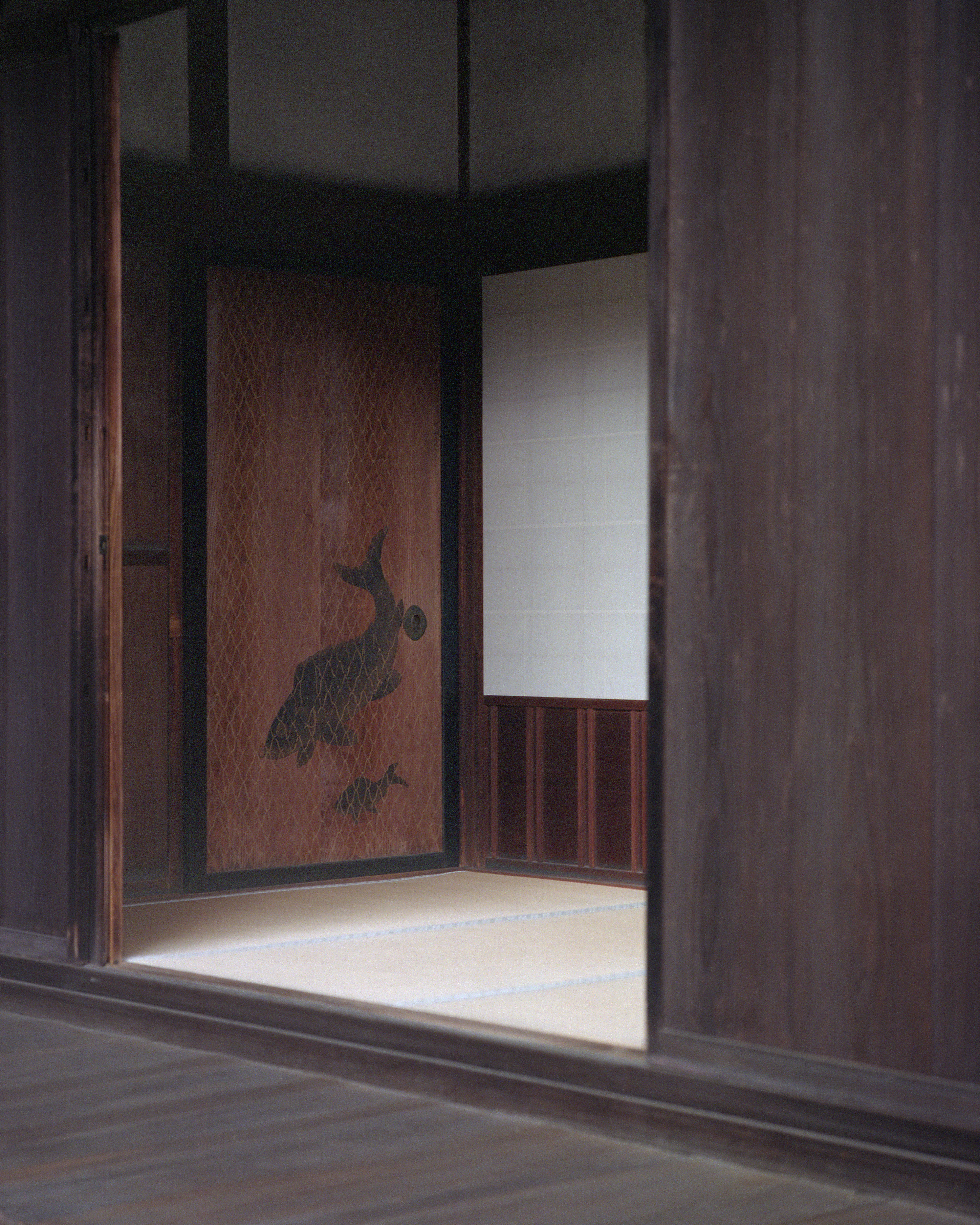
Un vecchio televisore JVC appeso in un angolo proietta immagini aeree della villa e i suoi giardini. Per l’ora successiva rimango in coda al gruppo mentre attraversiamo l’unico percorso consentito. Gli edifici, perlopiù sale da tè, si osservano solo dall’esterno. Gli interni, visibili oltre gli shoji lasciati aperti, sono il perfetto equilibrio tra il rigore tipico dell’architettura del periodo Edo e le concessioni decorative che dimostrano una antica propensione al design, come lo intendiamo oggi.
Tutt’intorno alla villa le mietitrici si muovono lente ma senza sosta. Alcune risaie occupano parte del terreno imperiale e si estendono tra gli alberi di pino. Il giardino ornamentale si mescola con le zone coltivate. Sono diverse le teorie secondo cui l’imperatore amasse percorrere il viale d’ingresso ammirando sullo sfondo il progressivo mutamento dei campi coltivati a riso. Un contrasto non solo estetico con il resto dei giardini ma anche formale, dove le tecniche di costruzione scenografica del giardino giapponese si mescolano con il senso pratico dell’agricoltura.
Non ho mai visto nulla di simile e il contrasto non crea alcun attrito. Il riso oltre ad essere un alimento fondamentale nella dieta nazionale, è un simbolo e un cardine di molta politica estera del paese da decenni. Qui viene messa in scena, da secoli, la relazione tra il potere e la terra che controlla.
Il resto del pomeriggio lo passo nei dintorni del quartiere, cosi diverso dal centro turistico della città che è diventata la più affollata di turisti del paese. Quando venni a Kyoto per la prima volta nel 2007 anche il centro manteneva un’atmosfera genuina, che si è persa con l’aumento dei visitatori. Oggi è stato sufficiente spostarmi qualche decina di minuti di treno verso l’esterno per ritrovare l’autenticità che mi aveva affascinato nel mio primo viaggio. A volte non serve nemmeno salire su un treno, basta camminare nella direzione opposta alla folla e ci si ritrova in un attimo dentro un viaggio diverso, unico.
Vicino alla villa scorre un affluente del fiume Takano che a sua volta confluisce nel Kamo. Quest’ultimo, come per molti fiumi che attraversano le grandi città, non solo definisce due aree distinte alle sponde opposte ma apre una breccia al centro della città antica che porta un senso arioso di possibilità e speranza. Ogni volta che visito Kyoto, che sia presto la mattina o quando il sole è già tramontato, una delle cose che preferisco è percorrere le sponde del fiume, dove l’energia scorre veloce come la corrente, tra le giovani coppie che camminano sfiorandosi le mani, i bambini che d’estate saltellano nell’acqua bassa, gli anziani che riposano all’ombra degli alberi, il fiume con il suo scorrere perpetuo assume la funzione di un emakimono, le tradizionali opere narrative illustrate su rotoli di carta. Il fiume è la naturale scenografia orizzontale su cui si muovono le vite degli abitanti della città, le sponde il loro palcoscenico e allo stesso tempo è la platea per i visitatori. Ripensando ai giardini della villa imperiale riaffiora più chiaro il senso scenografico della cultura estetica del paese. I giardini, i muri di cinta , ma anche gli edifici tradizionali e le aperture sull’esterno sono sempre progettate tenendo in considerazione il punto di vista di chi vivrà o visiterà quegli spazi.
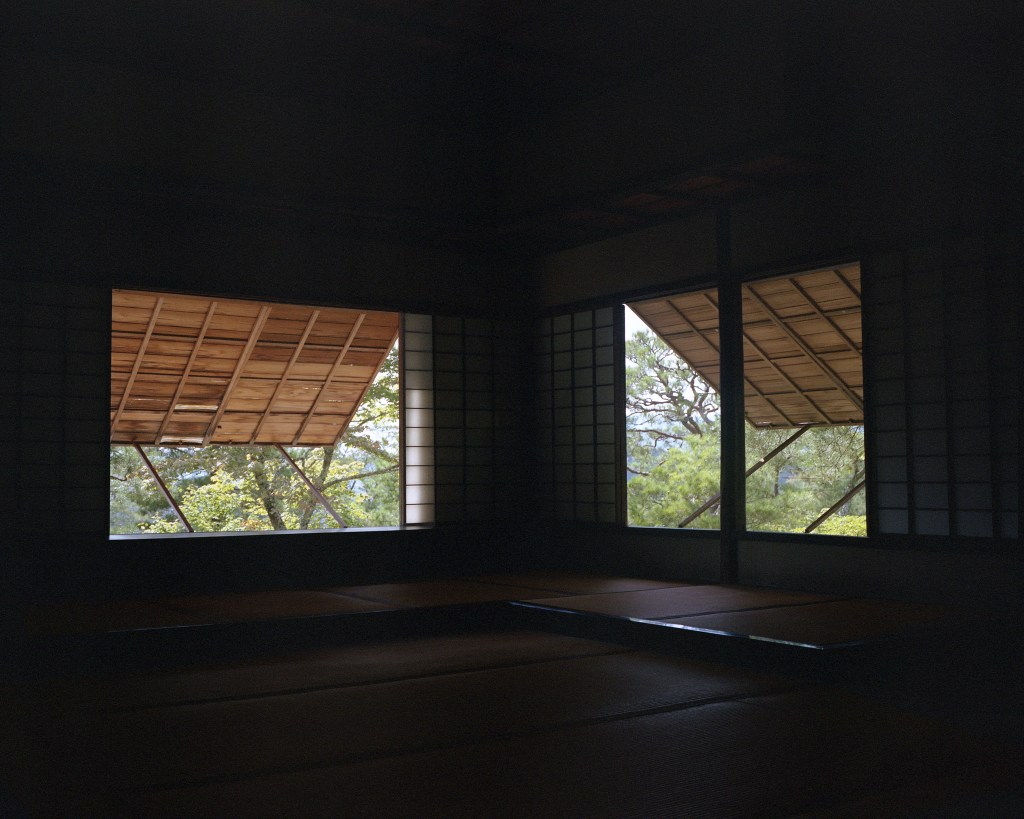
La natura all’esterno, non solo quella che può essere controllata – piante e alberi – ma anche le montagne in lontananza, i fiumi e le foreste, partecipano sempre alla composizione del progetto. Questa tendenza a includere ciò che non si può controllare all’interno di un disegno rende la visione del mondo più dolce, armoniosa. In fin dei conti si tratta solo di proporzioni, livelli, profondità, pieni e vuoti e il mondo diventa un’opera d’arte, inscritta in uno spazio definito, il punto di vista del giardino giapponese, e infinito allo stesso tempo, lo scorrere del fiume in una passeggiata al tramonto.
A Kyoto sono ancora molti gli spazi dove si può vedere il mondo da un punto di vista da cui tutto è in perfetto equilibrio. Forse è questo che crea la frenesia dei turisti che si accalcano a percorrere le stesse strade, per osservare gli stessi monumenti. È il desiderio di occupare per un’istante quel punto preciso da cui il mondo appare perfetto.
ENGLISH VERSION
It’s the tenth day of September, and in Kyoto, the rice is ready to be harvested. The stalks have started to yellow, and slow-moving harvesters are scattered throughout the outskirts. These are small, single-seater square machines with a mouth at the front that cuts the stems and spits them out in bunches. Along the field’s edges, the harvested crops hang to dry. Long rows of upside-down spikes create golden corridors, known as hazakake.
I walk aimlessly, only choosing whether to turn right or left at each intersection. I try to keep most of my body in the shade, in the span projected by the wall surrounding the houses. The road ends; a row of buildings blocks the passage. Going back means wasting time and going against one of the principles I travel with in this land: seeing the same thing twice if I could see something unknown instead. Between two of the square houses in front of me, I see a passage, just a few tens of centimeters wide. I slip inside.
My left shoulder forward, I have to move in small steps. If anyone living here were to open their window now, they’d find my face peering in. The gravel on the ground crackles with every step I take. I step over the engine of a ventilation system, a green watering can, and a pair of faded plastic slippers. With my right hand, I shield the lens of the Mamiya to prevent it from hitting any protrusions. When I reach the other side, I find myself in a sunny cement rectangle, with two cars parked on opposite sides. Opposite, closing off the parking lot, stretches a greenhouse: a series of steel arches covered with milky plastic. In some places, it’s stretched all the way to the ground; in others, it billows in the wind. In the front, only yellowed shreds remain. I approach. A melon hangs crookedly between a containment net and a lattice. I can’t make out any other vegetation because there isn’t any. I leave there.
The clouds have drifted away; the sky is higher than before. Further ahead, the road runs alongside a rice paddy. At the end of the street, I see a man sitting at a table, one of those camping tables that fold up and can be put in a car. I approach; he’s sitting on a foldable chair, and around him, he’s set up a parasol anchored to the ground with water-filled jerry cans.
He looks up and smiles at me. I return the smile and try to find a clue as to why he’s there. Behind him rises another wall, at least three meters tall, with a slightly open gate; on the ground, signage indicates two opposite directions, entrance, and exit.
I shift my gaze to the table in front of him, and immediately he hands me one of the brochures, whispering, “Ticket?” in quick succession. Sugakuin Imperial Villa – one of the Great masterpieces of Japanese gardening is the title of the brochure. Without diverting my gaze from the dated photos illustrating its colors in the four seasons, I pull out two five hundred yen coins from my pants pocket, and a second later, I’m inside.
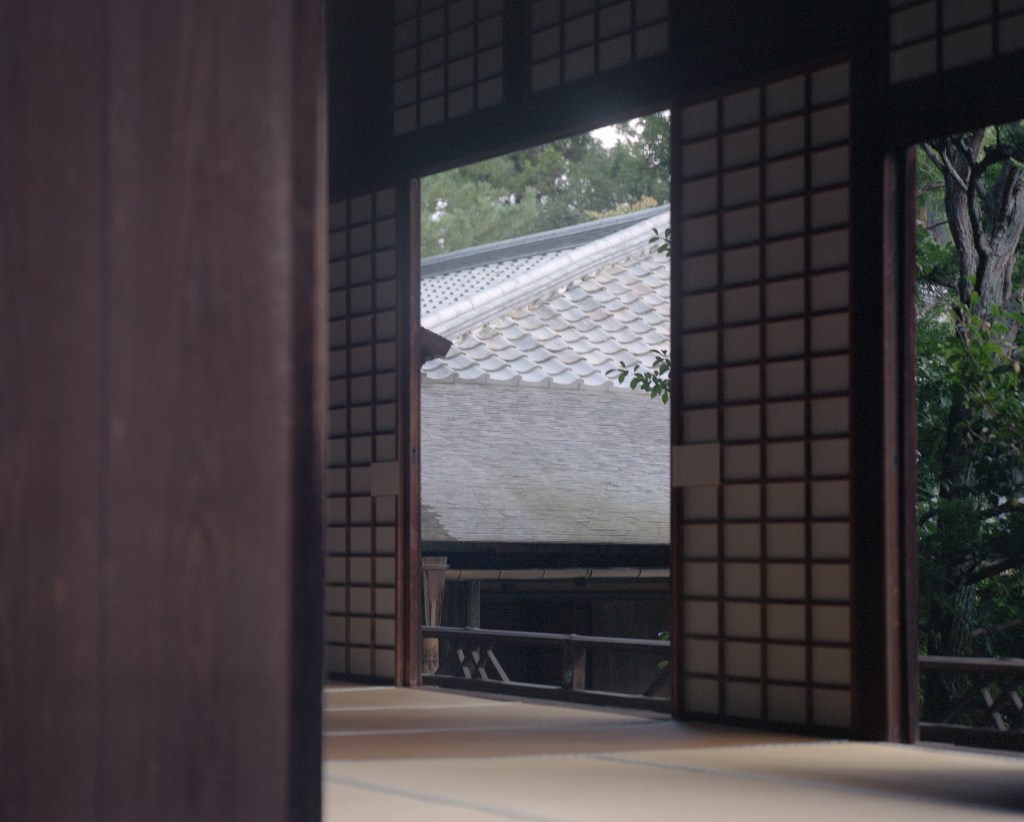
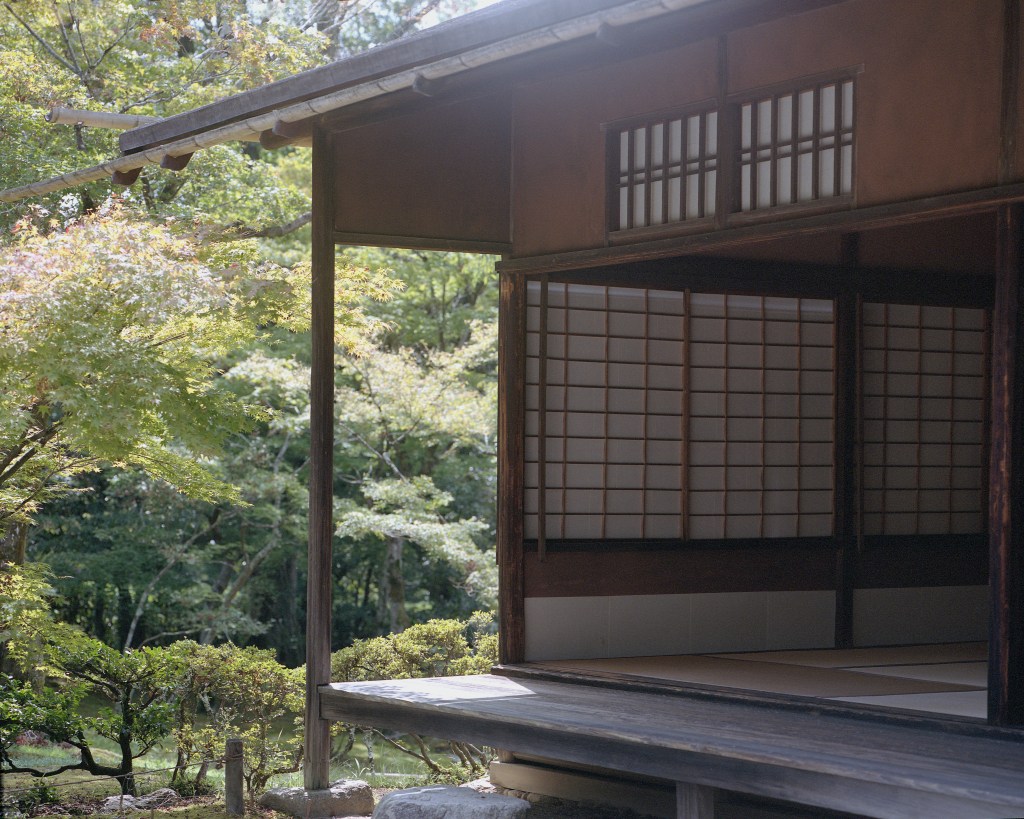
I walk along a concrete driveway to a waiting room where about ten locals are waiting for the guide to start the guided tour. An old JVC television hanging in a corner projects aerial images of the villa and its gardens. For the next hour, I remain in line with the group as we walk through the only permitted route. The buildings, mostly tea rooms, are only observed from the outside. When an open shoji reveals the interiors, they’re the perfect balance between the typical rigor of Edo period architecture and decorative concessions that demonstrate an ancient propensity for design, as we understand it today.
All around the villa, the harvesters move slowly but steadily. Some rice fields occupy part of the imperial land and extend among the pine trees. The ornamental garden blends with the cultivated areas. There are several theories as to why the emperor loved to walk along the entrance avenue, admiring the gradual change of the rice fields in the background. It’s not only an aesthetic contrast with the rest of the gardens but also a formal one, where the scenic construction techniques of Japanese gardens blend with the practicality of agriculture.
I’ve never seen anything like it, and the contrast doesn’t create any friction. Rice, besides being a fundamental food in the national diet, is a symbol and cornerstone of much of the country’s foreign policy for decades. Here, for centuries, the relationship between power and the land it controls has been staged.
I spend the rest of the afternoon in the neighborhood surroundings, so different from the tourist center of the city, which has become the most crowded with tourists in the country. When I first came to Kyoto in 2007, even the center maintained a genuine atmosphere, which has been lost with the increase in visitors. Today, it was enough to move a few tens of minutes by train towards the outskirts to rediscover the authenticity that had fascinated me on my first trip. Sometimes it’s not even necessary to board a train, just walk in the opposite direction to the crowd and you find yourself instantly in a different, unique journey.
Near the villa flows a tributary of the Takano River, which in turn flows into the Kamo. The latter, like many rivers that cross big cities, not only defines two distinct areas on opposite banks but also opens a breach in the center of the ancient city that brings an airy sense of possibility and hope. Every time I visit the city, whether it’s early in the morning or when the sun has already set, one of the things I prefer is to walk along the riverbanks. Here, the energy flows fast like the current, among young couples walking hand in hand, children jumping in the shallow water in summer, and the elderly resting in the shade of trees. The river, with its perpetual flow, takes on the function of an emakimono, the traditional narrative works illustrated on scrolls of paper. The river is the natural horizontal backdrop on which the lives of the city’s inhabitants move, the banks their stage and at the same time the audience for visitors. Reflecting on the gardens of the imperial villa, the scenic sense of the country’s aesthetic culture resurfaces more clearly. The gardens, the enclosing walls, but also the traditional buildings and openings to the outside are always designed taking into account the viewpoint of those who will live or visit those spaces. Nature outside, not only what can be controlled – plants and trees – but also the distant mountains, rivers, and forests, always participate in the composition of the design. This tendency to include what cannot be controlled within a design makes the world view sweeter, tamed. After all, it’s just a matter of proportions, levels, depths, solids, and voids, and the world becomes a work of art, inscribed in a defined space (the viewpoint of the Japanese garden) and infinite at the same time (the flow of the river on a sunset stroll). In Kyoto, there are still many spaces where you can see the world from a perspective where everything is in perfect balance. Perhaps this is what creates the frenzy of tourists crowding the same streets, to observe the same monuments. It’s the desire to occupy for a moment that precise point from which the world appears perfect.


 Nipponia Magazine