
Kamakura, Kanagawa Prefecture –
All’uscita ovest della stazione di Kamakura, un’onda di liceali in gita spinge fuori dai tornelli con l’irrefrenabile euforia dell’adolescenza. Con lo sguardo basso, osservo una scia di calzettoni bianchi e mocassini neri sfilare davanti a me. Sposto la macchina fotografica sul fianco destro facendo scivolare la tracolla sulla spalla, riporto il peso sulla parte anteriore dei piedi e inizio a camminare. Qualche metro più avanti mi fermo a guardare lo schermo dello smartphone. Sono le dieci e quaranta. Ricevo un messaggio da Agustin con cui si scusa per il ritardo. Rimetto il telefono in tasca e alzo lo sguardo. L’insegna di un caffè riporta in lettere romane un nome vagamente italiano. Dalla finestra, gli interni sembrano quelli di un kissaten in piena regola ( caffè dallo stile retrò tipici dell’epoca Showa [1926-1989]). Entrando, noto che accanto al nome è inciso l’anno 1967, quando questi caffè erano molto popolari.
All’interno conto otto posti a sedere, quattro sgabelli al bancone e quattro sedie disposte attorno a due tavolini. I proprietari, una coppia di anziani, mi guarda storto. A Kamakura i turisti sono chiassosi e troppi e forse i proprietari rimpiangono tempi migliori. Mi dispiace essere un ingombrante straniero perciò cerco di farmi piccolissimo mentre chiedo di potermi sedere. Senza nascondere che sia una seccatura mi indicano il posto nell’angolo. Ordino un caffè freddo e nell’attesa fisso il lavandino attaccato alla parete di fronte. È di dimensioni così ridotte da farmi pensare che non serva a lavarsi le mani, ma che sia utilizzato come distributore di acqua potabile. La finestra a fianco si affaccia sulla via principale. A quest’ora del mattino i turisti sono ancora sui treni che arrivano da Tokyo, tra non molto inonderanno le strade e poi i templi. Penso a quando venni a Kamakura dieci anni fa — quella gita è stata il primo passo nella scoperta di un Giappone diverso.
Ho appena bevuto l’ultimo sorso quando Agustin mi scrive di essere arrivato in stazione.
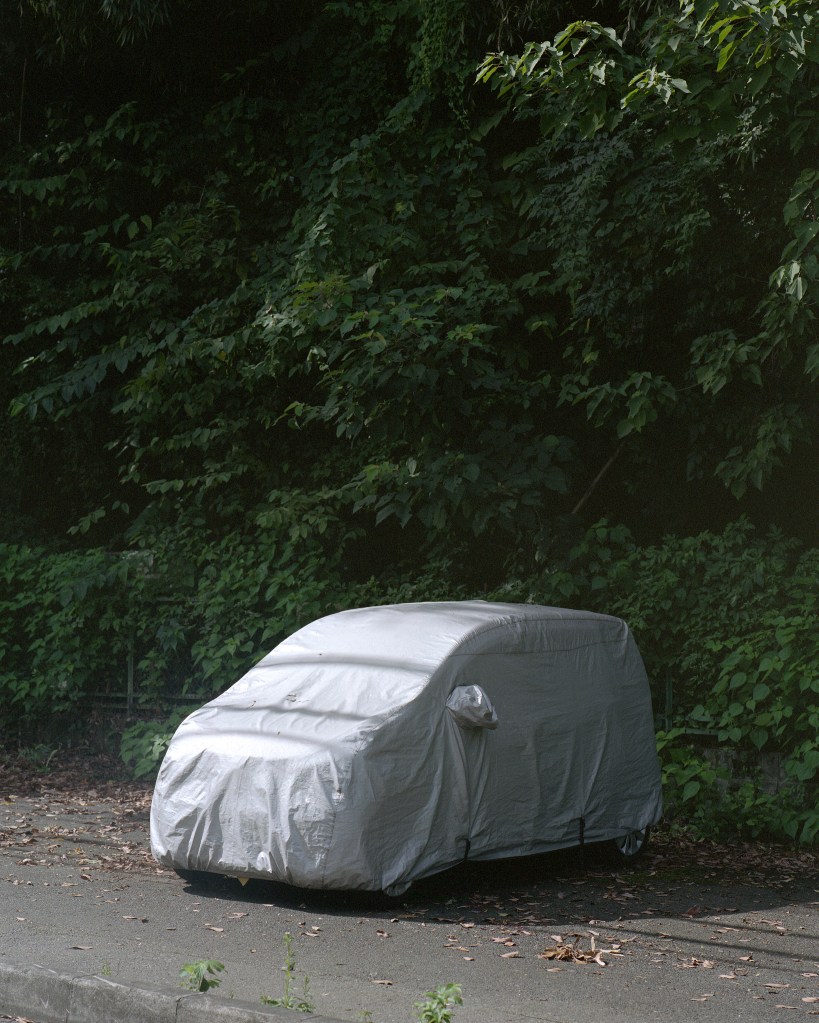
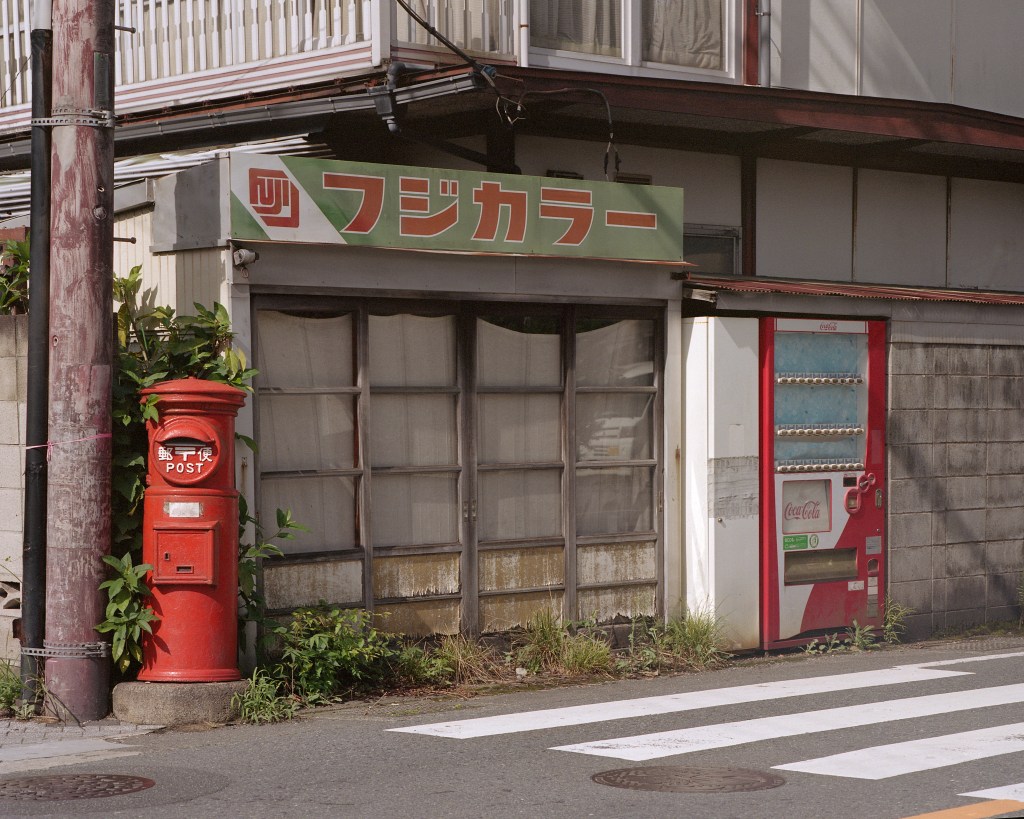
È la prima volta che ci incontriamo, e non potremmo essere più diversi nell’aspetto. Eppure, sembriamo soldati dello stesso esercito: macchina fotografica al collo, zaino pieno di attrezzature, cappellino con visiera, t-shirt, pantaloncini e sneakers. La nostra uniforme non lascia dubbi: siamo fotografi in missione.
Ci siamo conosciuti, se cosi si può dire, su Instagram, accumunati dalla passione per la fotografia e alla prima buona occasione avevamo deciso di incontrarci per una sessione fotografica. Camminiamo in direzione opposta alla folla di turisti che dalla stazione imbocca la via principale. Stiamo andando al tempio Kencho-Ji, il più antico tempio zen del Giappone. Qualche giorno prima Agustin aveva detto di volermi portare li, uno di quei luoghi ancora poco frequentati dai turisti, nonostante la rilevanza storica del sito. La fotografia è un buon modo per iniziare una conversazione e con Agustin è facile farsi trasportare dalla sua curiosità. Condividiamo esperienze e tecniche, trucchi e frustrazioni e dopo solo una decina di minuti siamo pronti ad abbassare la guardia.
Prima di arrivare a destinazione Agustin fa una deviazione verso un tempio ancor meno conosciuto. Camminiamo lentamente attorno al perimetro poi saliamo i gradini dell’edificio principale. Un fotografo sta scattando dei ritratti a una coppia di sposi, che indossa gli abiti da cerimonia tradizionali. Quando vede le nostre macchine fotografiche ci fa un cenno col capo e sorride. Ricambio mentre vedo Agustin allontanarsi verso il lato opposto del tempio.
Mi racconta che in passato gli è capitato di essere allontanato da altri fotografi che non volevano condividere la location in cui entrambi stavano scattando. Mi parla della difficoltà di vivere da straniero in Giappone, un paese che anche lui aveva idealizzato prima di metterci piede, e che si è spesso rivelato ostile o refrattario a lui in quanto ”gaijin” straniero.
Conosco la sensazione anche se non ho mai vissuto per un lungo periodo nel paese. Chiunque abbia viaggiato in Giappone avrà notato che nessun giapponese si siede accanto a voi in metropolitana, non importa quanto affollato sia il vagone. A volte, se siete voi ad inserirvi in un posto libero tra due persone, provocherete l’abbandono del posto da parte dei due vicini, che preferiranno stare in piedi piuttosto che rimanervi a fianco. Sono entrato in ristoranti dove mi è stato fatto capire in modo netto che non ero il benvenuto, con un semplice no e con le braccia messe a lettera x come uno scudo. Piccoli gesti che rivelano come alcuni non apprezzino l’invasione di turisti stranieri nel paese. Forse per diffidenza, paura o semplice fastidio. Agustin, che ormai vive qui da anni, ha vissuto esperienze ancor più rivelatrici di un certo sentimento ostile nei confronti dell”altro”.
Scattiamo qualche foto al cimitero del tempio ma la luce non è favorevole perciò torniamo sulla via principale.
Camminiamo sullo stretto marciapiede, io dietro di lui, che si immette in un tunnel di cemento. La strada torna dritta, tutt’intorno siamo circondati da una foresta fitta e silenziosa. I rami che sporgono sopra le nostre teste sono adornati da enormi ragnatele. Quando provo a immaginare la dimensione del ragno che ha prodotto un intrigo di tale grandezza mi compare davanti agli occhi un esemplare dalle lunghe zampe appuntite, il ventre tondo della dimensione di una ciliegia. Mi abbasso più del dovuto per evitare di impigliarmi in qualsiasi cosa ne possa provocare la caduta. Odio i ragni.

Il silenzio si fa più avvolgente appena superato il portale del tempio, la natura attorno sembra assorbire i rumori. Anche le voci dei corvi sembrano attutite dagli alberi.
Visitiamo gli edifici uno dopo l’altro, togliendoci le scarpe ogni volta prima di entrare. Camminiamo su passerelle di legno, affacciandoci a ogni apertura per osservare ogni angolo, ogni dettaglio nascosto.
Il contrasto con la luce del sole all’esterno rende il buio degli interni ancora più intenso. Ci vuole qualche secondo prima di leggere le forme delle statue e i disegni sui soffitti. Il buio rende tutto più denso, gli spazi sembrano inaccessibili. Una forza invisibile mi costringe nell’orbita dello sguardo della statua del Buddha più antica. Io e Agustin portiamo la macchina fotografica al viso più volte, inquadriamo, ma poi non scattiamo nessuna fotografia. Guardo verso l’esterno e la foresta sembra brulicare di rumori. Il silenzio che ho percepito poco fa non è niente se paragonato a quello all’interno della sala principale del tempio.
Mi costringo a ritrarre alcuni vasi che contengono piante di fior di loto asiatico. Sono tutto attorno alle passerelle di legno che costeggiano i padiglioni del tempio. Agustin mi indica un sentiero sul versante del monte, dice che si può salire più in alto per osservare l’intera area e che nelle giornate di sole si può vedere fino al monte Fuji. Da quando siamo entrati al tempio non abbiamo parlato più molto, l’atmosfera solenne assorbe ogni frivolezza ma appena imbocchiamo il sentiero l’aria torna leggera. Per arrivare al piccolo tempio Hansobo sulla cima bisogna percorrere una ripida scalinata circondata da statue di Tengu in diverse pose. I Tengu sono creature umanoidi tra i tanti demoni, o yokai , del folklore giapponese.
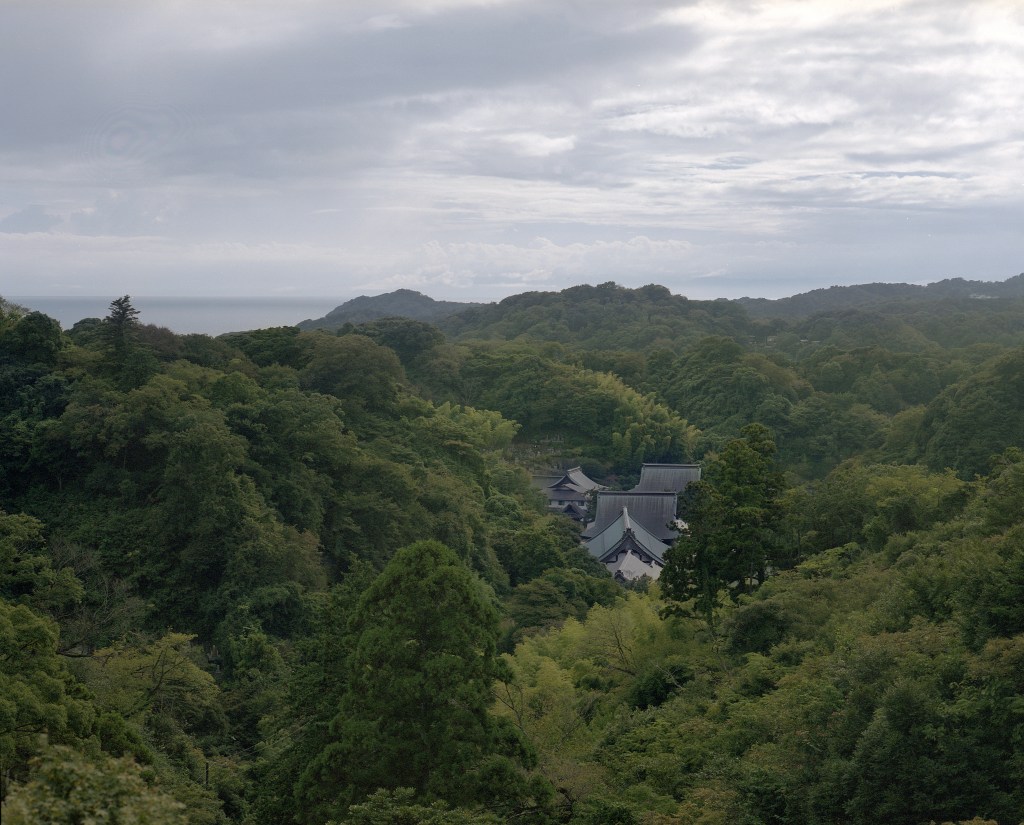
Ci fermiamo a osservare il panorama. Da qui la foresta sembra mangiarsi tutto, è immobile e fitta, come una densa coltre di nuvole che non rivela alcuna traccia della vita sottostante. Spuntano solo i tetti dei templi la cui forma, da qui, acquista un nuovo senso.
Il ritmo delle parole di Agustin non ha fatto che aumentare da quando ci siamo allontanati dal tempio, rimane in silenzio solo un’istante ad osservare la foresta poi ricomincia.
Fino a quel momento abbiamo condiviso idee sulla fotografia e sul Giappone, sui posti che abbiamo visitato o sui software per rendere meglio i colori della pellicola, qui invece Agustin mi racconta di lui e del suo passato. Sembra voler depurare dei ricordi inquinati affidandoli alla foresta.
Mentre lo fa non posso fare a meno di pensare che lo conosco solo da poche ore, abbiamo vite diverse sotto ogni aspetto e forse non ci incontreremo mai più, eppure lo sento vicino. Sento il desiderio di condivisione che manifesta con la sua fotografia, la frustrazione di chi vive in una terra straniera e della difficoltà di costruire relazioni, sento la rabbia con cui prova a dare un senso al passato e la paura di un futuro incerto. Agustin mi confessa molto di se e lo fa tenendo gli occhi puntati all’orizzonte, dove l’oceano si fonde col primo tono di blu del cielo. Lo guardo senza parlare, poi lui si alza per prendere fiato, si asciuga il sudore sulla fronte con un piccolo asciugamano che ha tenuto al collo tutto il giorno, poi sparisce.
Rimango seduto con gli occhi fissi sul bosco, non ho più acqua nella bottiglia ma continuo a scuoterla.
Quando Agustin ricompare mi alzo e vorrei dirgli che andrà tutto bene ma lui mi porge un piccolo rettangolo di stoffa nera.
“ Ti ho preso un amuleto”
“… Grazie… non dovevi.”
Guardo l’omamori che mi porge e lo afferro. Lo rigiro incredulo.
“È per i tuoi desideri. Li farà avverare.”
Agustin mi ha comprato un amuleto, di quelli che si trovano in ogni tempio in Giappone. I diversi colori della seta ricamata con cui sono realizzati li distinguono per ambito propiziatorio, ma è a discrezione del tempio assegnarne la categoria.
Agustin guarda lontano poi si volta e inizia a scendere la scalinata “ Torniamo indietro?”
” Si “ – lo seguo di nuovo nel bosco.
La strada del ritorno la facciamo in silenzio. Le auto ci sfrecciano accanto, prima non ne passavano molte ma ora il traffico è diventato più intenso. Quando la strada si immette nella zona turistica veniamo accerchiati da una folla di persone che camminano in tutte le direzioni. Entrano ed escono dai negozi, si scattano fotografie davanti alle insegne, parlano in tutte le lingue ma dicono tutti le stesse cose.
Arrivati in stazione ci stringiamo la mano prima di dividerci. Ci ripromettiamo di sentirci, di continuare a scambiarci riflessioni e consigli sulla fotografia, e di rivederci al mio prossimo viaggio qui. Vorrei ringraziarlo di più, per aver speso la giornata con me, un perfetto sconosciuto, e avermi portato dove forse non avrei mai messo piede. Il suo treno è in arrivo alla banchina e Agustin sparisce in fretta tra la fila scomposta di turisti che salgono impazienti nei vagoni.
Guardo l’insegna che indica i treni in arrivo, il mio è programmato tra sei minuti. Metto le mani in tasca e con la sinistra conto tre monete da uno yen dal peso inconfondibile, e una solida moneta da cento, che riconosco dal profilo ruvido. Nella tasca destra le dita afferrano un filo annodato che fa risalire l’amuleto nel palmo della mano. Stringo l’amuleto e penso a quali desideri vorrei si avverassero all’istante. Ma non c’è nient’altro che voglio, solo essere li, a perdermi per le vie del Giappone. Ancora per un pò.
ENGLISH VERSION
Outside the west exit of Kamakura Station, a wave of high school students on a field trip spills out through the gates with the irrepressible energy of adolescence. Staring down, I catch a blur of white socks and black loafers flowing past me. I shift my camera to my right side, letting the strap slide across my shoulder. Then, leaning forward slightly on the balls of my feet, I start walking. A few steps ahead, I pause to check my phone. It’s 10:40. A message from Agustin pops up—he’s apologizing for being late. Sliding my phone back into my pocket, I glance up. A café sign in Roman letters spells out a vaguely Italian name. Through the window, the interior looks like a perfect kissaten—those retro coffee shops that became popular during the Showa era (1926–1989). Stepping inside, I notice the date “1967” etched under the café name. A relic from when these spaces were still thriving.
There are only eight seats inside—four stools at the counter and four chairs around two small tables. The elderly owners eye me warily. Kamakura’s overrun with noisy tourists, and they probably long for quieter days. I feel self-conscious about being another conspicuous foreigner, so I make myself as small as possible while asking for a seat. With a barely concealed sigh, they gesture toward the corner. I order an iced coffee and, while waiting, let my gaze settle on a tiny sink mounted on the opposite wall. It’s so small that I wonder if it’s meant for drinking water rather than washing hands. A window beside it looks out onto the main street, still relatively calm at this hour. Most tourists are still on trains coming from Tokyo. Soon, they’ll flood the streets and temples. I think back to my first visit to Kamakura ten years ago—that trip felt like my first real glimpse of a different Japan.
I’m taking the last sip of my coffee when Agustin texts to say he’s arrived at the station.
It’s our first time meeting, and we couldn’t look more different. Still, we’re unmistakably soldiers of the same army: cameras around our necks, backpacks stuffed with gear, baseball caps, T-shirts, shorts, sneakers. Our uniform leaves no doubt—we’re photographers on a mission.
We met—if you can call it that—on Instagram, bonded by our shared love of photography. When the chance came up, we decided to meet for a photo walk. We head in the opposite direction of the tourist crowds streaming from the station onto the main street. Our destination is Kencho-ji Temple, the oldest Zen temple in Japan. A few days ago, Agustin suggested taking me there, explaining that it’s still relatively quiet despite its historical significance. Photography makes for an easy conversation starter, and with Agustin, it’s easy to get carried away by his curiosity. We swap stories and tips, tricks and frustrations, and within ten minutes, we’ve lowered our guards.
Before we reach Kencho-ji, Agustin takes a detour to a smaller, lesser-known temple. We stroll around the perimeter and then climb the steps to the main hall. A photographer is taking portraits of a couple in traditional wedding attire. Noticing our cameras, he nods and smiles. I smile back, watching as Agustin wanders off toward the other side of the temple.
He tells me about past encounters with territorial photographers who didn’t want to share shooting locations. Then he talks about the challenges of being a foreigner in Japan—a country he once idealized but has often found unwelcoming, even hostile, toward outsiders.
I know the feeling, though I’ve never lived here long-term. Anyone who’s traveled in Japan might notice how no one sits beside you on the train, no matter how crowded the carriage is. Sometimes, if you take a seat between two people, they’ll abandon their spots, preferring to stand rather than stay next to you. I’ve walked into restaurants only to be firmly turned away, a simple “no” accompanied by arms crossed in an X, like a shield. Small gestures, but they reveal how some people resent the influx of foreign tourists—whether out of distrust, fear, or simple annoyance.
Agustin, who’s been living here for years now, has faced even sharper instances of this hostility.
We take a few shots in the temple’s cemetery, but the light isn’t quite right, so we head back to the main road. Walking along the narrow sidewalk, I trail behind him as we enter a concrete tunnel. The road straightens out, and suddenly we’re surrounded by dense, silent forest. Overhead branches are draped with enormous spiderwebs. I try not to think about the size of the spiders that spun them, but in my mind, I see long, spindly legs and a round, cherry-sized body. Ducking lower than necessary, I make sure not to disturb anything that might trigger a collapse. I hate spiders.
The silence grows even deeper as we pass through the temple gate. The forest absorbs every sound. Even the crows’ calls seem muted by the trees.
We visit the buildings one by one, removing our shoes before stepping inside. Wooden walkways lead us from one structure to another, each turn offering new views of hidden corners and unexpected details.
The contrast between the sunlight outside and the darkness within makes the interiors feel even more shadowed. It takes a few moments for my eyes to adjust enough to make out the shapes of statues and ceiling designs. The darkness feels dense, almost impenetrable. An invisible force holds me in the gaze of the temple’s oldest Buddha statue. Agustin and I both raise our cameras to our eyes repeatedly, framing shots we never take. Looking outside, the forest seems alive with sound. The silence I noticed earlier is nothing compared to the profound stillness of the temple’s main hall.
I force myself to take a picture—some lotus plants in vases around the walkways encircling the temple pavilions. Agustin points to a mountain path. He says we can climb higher for a view of the entire site, and on clear days, you can even see Mount Fuji.
We’ve barely spoken since entering the temple—the solemn atmosphere seems to absorb every bit of chatter. But as soon as we start up the path, the air lightens again.
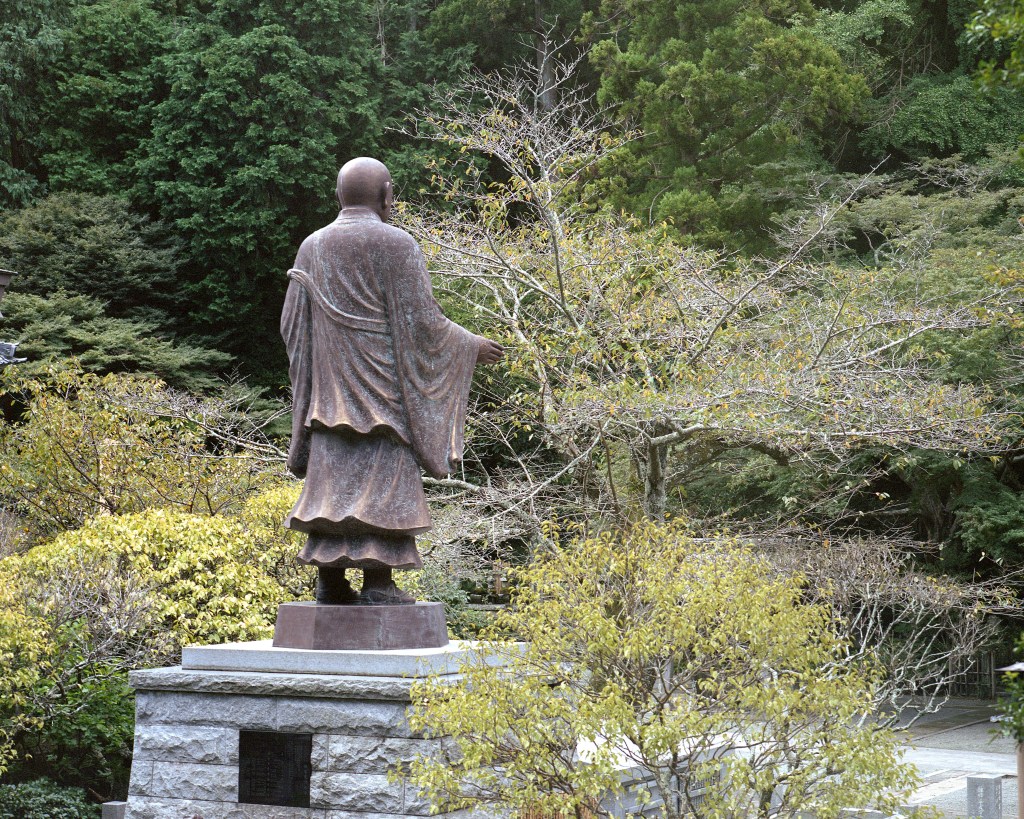
To reach Hansobo Shrine at the summit, we climb a steep staircase lined with statues of Tengu, humanoid creatures from Japanese folklore.
We pause at the top to take in the view. The forest swallows everything below. It’s dense and still, like a thick layer of clouds concealing all traces of life beneath. Only the temple roofs poke through, their shapes taking on new meaning from this height.
Agustin’s words spill out as we descend, his rhythm picking up the farther we get from the temple. He stops only briefly to glance at the forest before starting again.
Until now, we’ve talked about photography, Japan, places we’ve visited, and ways to tweak film colors with editing software. But here, Agustin shares pieces of his past. It’s like he’s trying to purge his clouded memories, releasing them into the forest.
I think about how I’ve only known him for a few hours, how our lives couldn’t be more different, and how we might never meet again. Yet, I feel close to him. I sense the yearning for connection in his photography, the frustration of living in a foreign land, the struggle to form relationships. I feel the anger he carries as he tries to make sense of the past and the fear of an uncertain future.
Agustin tells me so much about himself, his eyes fixed on the horizon where the ocean blurs into the sky’s first shade of blue. I watch him in silence. Then he stands, wipes the sweat from his forehead with the small towel he’s kept around his neck all day, and disappears.
I sit there, staring at the forest. My water bottle is empty, but I keep shaking it anyway.
When Agustin returns, I stand up, wanting to tell him it’ll be okay. Instead, he hands me a small rectangle of black fabric.
“I got you a charm.”
“…Thank you… you didn’t have to.”
I stare at the omamori in disbelief, turning it over in my hands.
“It’s for your wishes. It’ll make them come true.”
Agustin bought me a temple charm, the kind you find all over Japan. Each one is embroidered with silk thread in specific colors, signifying different blessings, though their exact purpose is decided by each temple.
Agustin looks away, then turns back toward the stairs. “Shall we head back?”
“Yeah.” I follow him back into the woods.
The return journey is quiet. Cars rush past us—there weren’t many before, but now the traffic has picked up. As we approach the tourist area, we’re surrounded by crowds of people walking in all directions. They enter and exit shops, take photos in front of signs, speak in all languages but say the same things.
When we reach the station, we shake hands before parting ways. We promise to keep in touch, to continue exchanging thoughts and tips on photography, and to meet again the next time I’m here. I want to thank him more, for spending the day with me, a total stranger, and for showing me places I might have never visited on my own. His train arrives at the platform, and he quickly disappears into the disorganized line of tourists rushing to board their trains.
I look up at the sign indicating the arrival of trains. Mine is in six minutes. I slip my hands into my pockets, and with my left hand, I count three one-yen coins, each with that unmistakable weight, and a solid hundred-yen coin with its rough-edged profile. In my right pocket, my fingers find a knotted string that pulls the omamori up into my palm. I hold the charm tightly and think about which wishes I’d like to come true right now. But there’s nothing more I want. Just to be here, to lose myself in the streets of Japan. For a little while longer.
 Nipponia Magazine
Una replica a “Con uno sconosciuto a Kamakura – With a stranger in Kamakura”
mi sembrava di esserci anche io, a kamakura, leggendo queste righe. Ci si sente quasi in colpa ad avere la passione per il Giappone, vessato dai turisti e dalla speculazione. Vi condivido molta paura per questo, io vorrei abitarci, vorrei lavorarci promuovendone l’arte e la cultura. So che non sarà facile