
Futakotamagawa, Tokyo Prefecture –
(ENGLISH VERSION BELOW)
A sud Tokyo finisce sul fiume Tama. Il treno della linea Hanzomon che lo attraversa me l’ha fatto conoscere durante il mio primo soggiorno a Tokyo nel 2007. Vivevo ad Azamino, un quartiere residenziale a una ventina di minuti col treno espresso da Shibuya, parte della municipalità di Yokohama. Ogni giorno ci passavo sopra e il fiume brillava sotto il sole estivo. La mia scoperta di Tokyo iniziava qui: attraversavo ogni giorno il confine invisibile della città, per poi passare sulla sponda opposta la sera, ancor più confuso che a inizio giornata.
Futakotamagawa era solo la cantilena della voce che annunciava le fermate della metro, così come Mizonokuchi o Tama Plaza, che avevo imparato a conoscere per ricordarmi quando dovevo scendere dal treno sulla via del ritorno. Durante l’ultimo viaggio, il decimo nel Paese, in una giornata di scarsa ispirazione, decido di riprendere l’esplorazione dei confini di Tokyo (vedi The End of Tokyo pt.1) e partire dal confine sud. Da quel luogo che per quasi vent’anni era rimasto solo una cantilena che accendeva la nostalgia di un tempo passato. Sceso alla stazione, percorro la riva del fiume. Era a tutti gli effetti identica alla fine della città sulla sponda del fiume Naka che avevo già visitato. Qui il quartiere però era alquanto moderno, la zona della stazione circondata da una fitta foresta di grattacieli massicci infarciti di centri commerciali, catene di ristorazione e caffè. Sono le dieci del mattino e il caffè bevuto prima del viaggio in treno ha esaurito il suo effetto. Nonostante sia qui da due settimane, questa volta non riesco ad abituarmi al fuso orario giapponese. Apro Google Maps alla ricerca del caffè più vicino e sulla mappa compaiono una decina di Starbucks nel raggio di duecento metri.
Mi allontano alla ricerca di un locale più autentico e decido di perdermi; forse un po’ di avventura mi risveglierà dal torpore che non mi lascia fiato. Vado verso est, voglio vedere cosa c’è oltre la zona riqualificata attorno alla stazione. Forse il quartiere si rivelerà avere un fascino inaspettato o almeno spero.
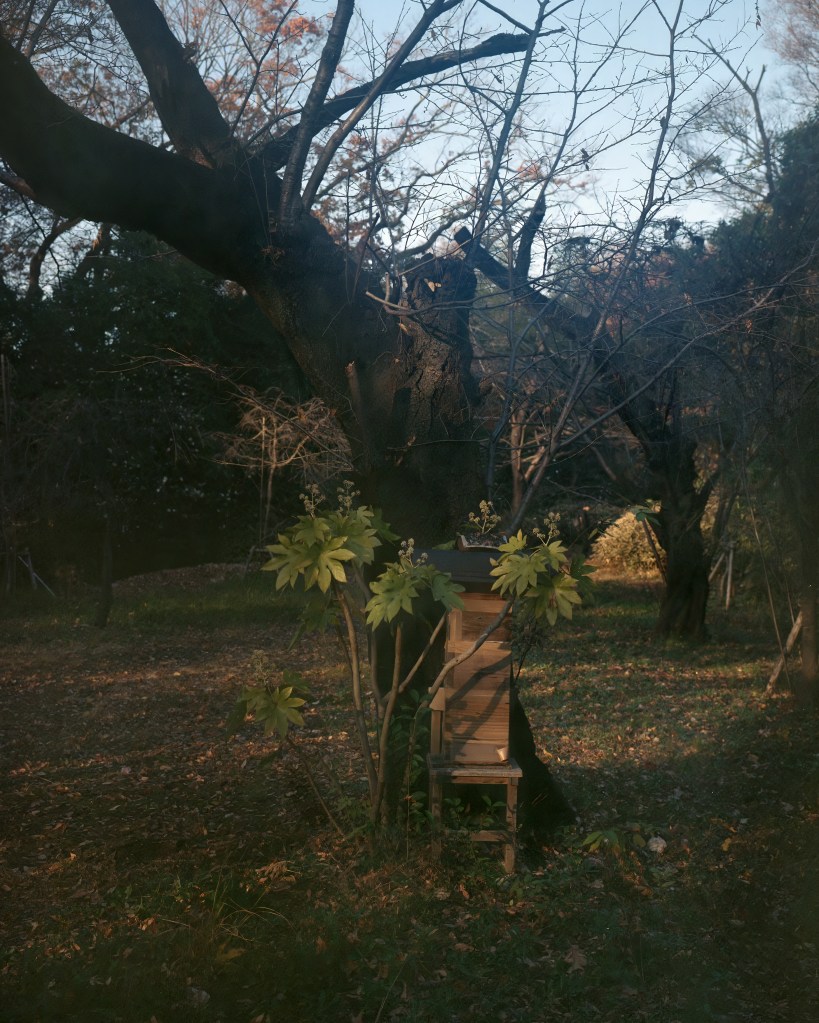
Dopo trenta minuti passati ad attraversare strade strette tra villette a due piani, mi rassegno ad ammettere che non c’è nulla qui che valga la pena di essere visto. Non riesco a scattare una fotografia. Nonostante molte delle case private abbiano un’architettura che mi smuove fin quasi alla commozione a ogni giro d’angolo, mi sento osservato e non riesco a puntare la macchina fotografica sulle vite degli altri. Non c’è un’anima viva in giro; in ogni casa, due o tre biciclette parcheggiate davanti all’ingresso. Alcune piccole, di quelle da bambino, altre da adulti ma con uno o due seggiolini per i figli. Macchine parcheggiate nei garage aperti, per lo più costose, d’importazione. Le tende scostate delle finestre ai piani superiori fanno pensare che qualcuno si possa affacciare da un momento all’altro. Non un negozio, nemmeno un parrucchiere, cosa alquanto insolita vista l’ossessione dei giapponesi abbienti per i saloni di bellezza. Mi sento un intruso e nessun alibi artistico mi consente di scattare una fotografia; mi sembra un gesto sleale. Forse qui, se mai ci è passato un turista, sarà stato per errore.
Poi una bicicletta, di quelle con davanti un’estensione che funge da cabina per accomodare più bambini, mi scorre accanto silenziosa. La guida un occidentale, che mi guarda con indifferenza. Un padre; forse questo è un quartiere per espatriati in cerca di spazio per costruire una famiglia a una distanza accettabile dal centro di Tokyo. Avrei dovuto informarmi prima, non c’è niente da vedere qui.
Vado verso nord, passando sotto alla sopraelevata. Alcuni taxi sono parcheggiati all’ombra; un conducente dorme con la portiera del passeggero spalancata, altri fumano sigarette e bevono succhi di frutta da confezioni spremibili. Mi sento solo e annoiato.
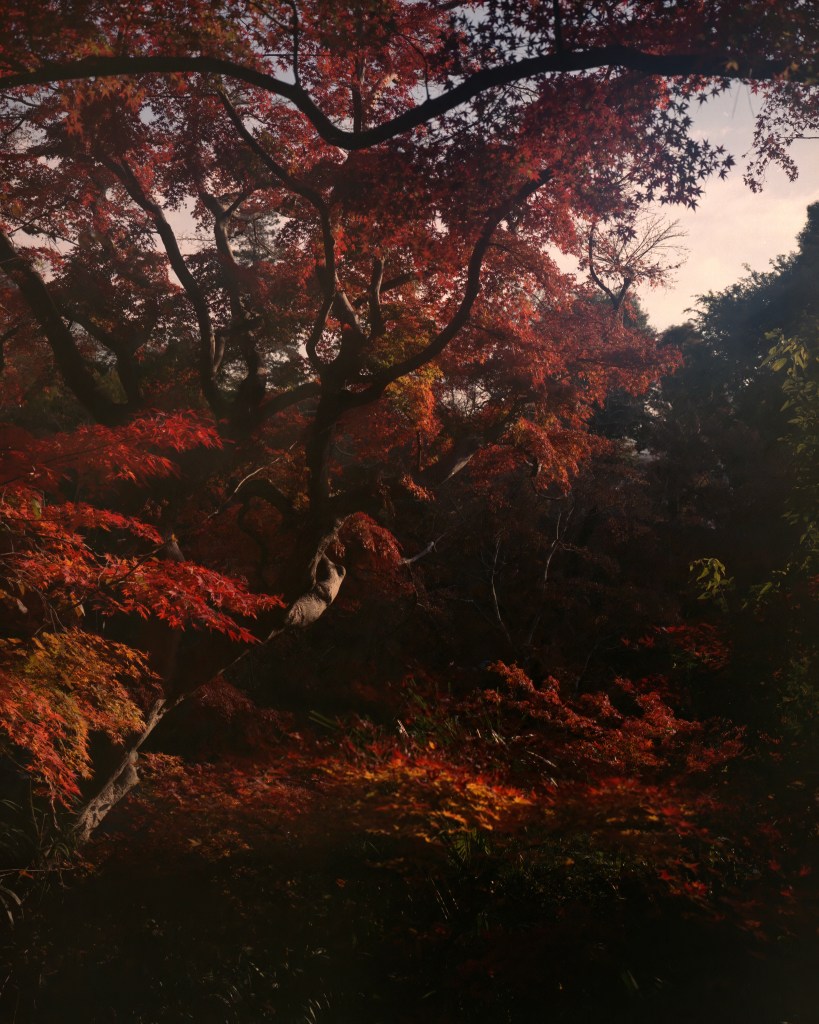
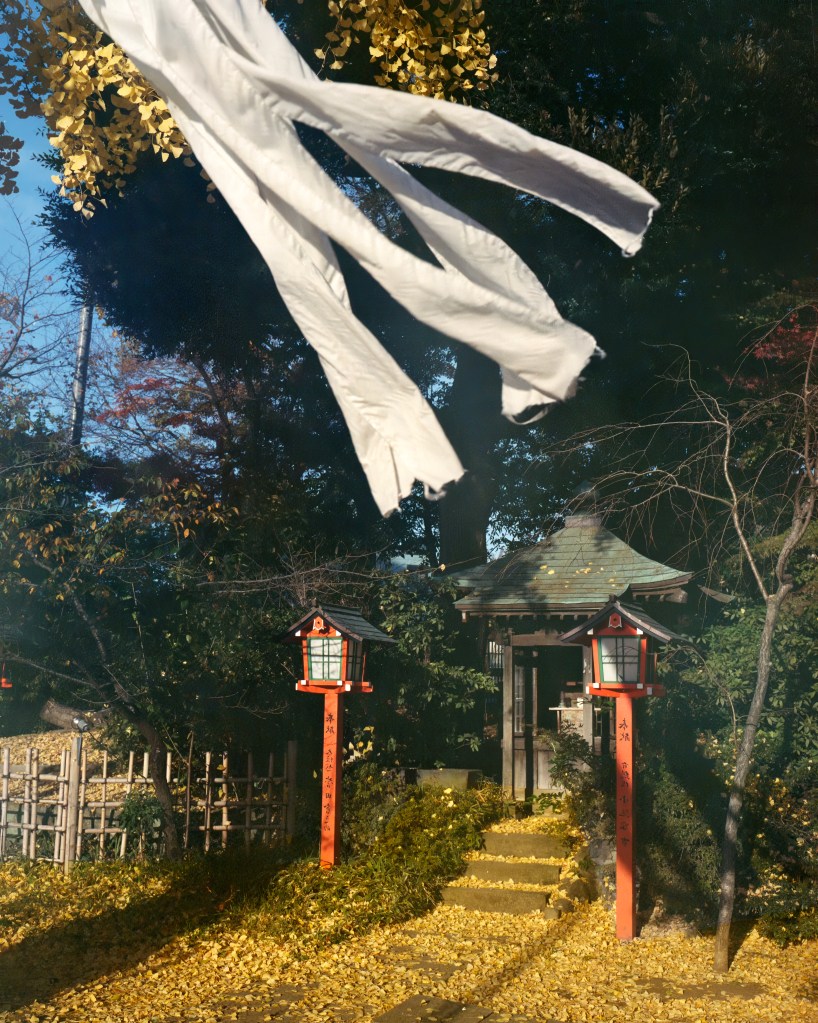
Risalgo il crinale di una collina, la strada è diventata improvvisamente ripida. Una volta in alto sono costretto a percorrere una strada ad alta percorrenza. Guardo giù, dove la strada si infila tra le chiome di alberi rossi d’autunno. Un canale scorre tra quello che sembra una fetta di bosco; seguo con gli occhi la corrente e respiro d’improvviso un po’ di magia. Le gambe prendono a muoversi con rinnovato entusiasmo e cercano una via d’accesso al sentiero che si allunga nel bosco. Lo raggiungo dall’interno dei giardini di un tempio nascosto tra la vegetazione e mi ritrovo in un mondo parallelo. Non può essere Tokyo questa. All’ingresso del sentiero un cartello mi rivela essere la valle di Todoroki. Tutt’attorno aceri di ogni sfumatura di rosso; cammino incontrando sale da tè in stile tradizionale, piccoli templi e statue votive, un giardino botanico. Nessun visitatore, solo io e la mia macchina fotografica che ancora fa la difficile, stavolta per la scarsa luminosità che rende impossibile catturare l’atmosfera del posto. Non fa niente, non devo per forza raccogliere le prove.
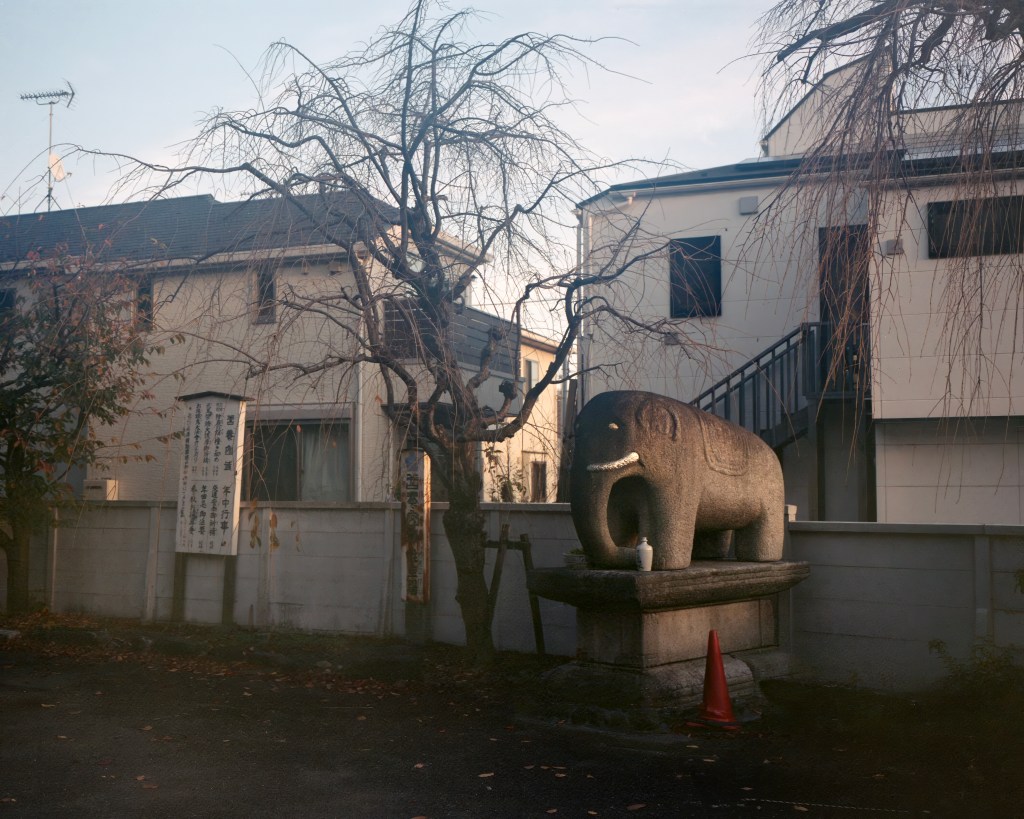
Torno sulla strada. Le case sono ancora più commoventi delle precedenti. I muri di cedro bruciato, pareti di cemento, enormi finestre sui cortili interni e minuscole feritoie danno sulla strada. Aceri verdi e rossi, piante di nandina come accenti davanti agli ingressi, gradini fatti con pietre recuperate chissà dove, grondaie che sboccano su catene ornate da fantasie geometriche. E le forme delle case. Spigolose, estruse, proiezioni di stanze che creano posti auto, terrazze e più livelli. Sulla destra un tempio è circondato da strane statue. Un elefante di pietra è piazzato nel parcheggio.
È un viaggio strano questo. L’ho pianificato molto, ma senza trovare ciò di cui avevo bisogno. Forse perché ho cercato nel posto sbagliato. Due anni fa avevo viaggiato da solo con una fame di scoperta tale da rendermi euforico per ogni ora di veglia. Camminavo per ore sotto il sole e, per la prima volta nella vita, sentivo di stare facendo esattamente ciò che dovevo fare. Credevo che questa volta mi spettasse un Giappone diverso, più consapevole ma altrettanto entusiasmante. La mia prospettiva sul progetto mi aveva portato a cercare un senso più profondo, tornando a studiare la lingua e la cultura giapponese in modo più serio di prima, spinto proprio dall’entusiasmo di quel viaggio precedente.
.
Ci sarebbe voluto ancora qualche giorno, quello prima della partenza, per arrivare ad afferrare il senso di questo momento della vita, molto diverso da tutti quelli vissuti prima.
Due giorni dopo, seduto sulla panchina dove Hirayama guarda gli alberi nel film Perfect Days, grato per tutto, piansi una sola lacrima. Capii che per tanto tempo avevo cercato me stesso in Giappone. Me, quando a vent’anni girovagavo per le strade di Shibuya, intrappolato nella mia testa e furioso all’idea che nessuno avrebbe potuto salvarmi al posto mio. Per anni fotografare il Giappone era stato cercare la mia ombra, vedere coi miei occhi di allora, di nuovo, spaventati ma affamati di vita. Allontanandomi per sempre da quell’io così scomodo, anni dopo ero tornato in Giappone alla ricerca di una prova che fossi esistito davvero in quel modo, lì, in quel posto.
Questo viaggio mi ha lasciato senza parole perché quella parte di me, che ha resistito per due decenni, era finalmente sparita per sempre. Il Giappone era tornato uno spazio vuoto, dove ero da solo per la prima volta.
Raggiungo la sponda del fiume dove sembra raccogliersi la gente del quartiere. Alcuni fanno sport, giovani coppie camminano sfiorandosi le mani, bambini corrono attorno ai genitori come satelliti. Poi c’è un signore. Fa le bolle di sapone per una bambina. Rimango a guardare il tramonto attraverso il loro gioco. Non riesco a non pensare che vorrei essere a casa, anche se so che appena salirò sull’aereo vorrei non dover partire mai.
ENGLISH VERSION
To the south, Tokyo ends at the Tama River. The train on the Hanzomon Line that crosses it first introduced me to it during my first stay in Tokyo in 2007. I was living in Azamino, a residential neighbourhood about twenty minutes by express train from Shibuya, part of the municipality of Yokohama. Every day I crossed over it, and the river shimmered beneath the summer sun. My discovery of Tokyo began here: every day I crossed the city’s invisible boundary, only to return to the opposite bank in the evening, even more bewildered than I had been at the start of the day.
Futakotamagawa was nothing more than the sing-song voice announcing the metro stops, much like Mizonokuchi or Tama Plaza, names I had learned to recognise so I would remember when to get off the train on the way home. During my latest trip, the tenth to the country, on a day lacking inspiration, I decided to resume my exploration of Tokyo’s borders (see The End of Tokyo) and start from the southern edge. From that place which, for almost twenty years, had remained only a refrain that stirred the nostalgia of a time gone by. Getting off at the station, I walked along the riverbank. It was, in every respect, identical to the end of the city on the banks of the Naka River that I had already visited. Here, however, the neighbourhood was decidedly modern, the area around the station surrounded by a dense forest of massive skyscrapers packed with shopping centres, restaurant chains and cafés. It is ten in the morning, and the coffee I drank before the train journey has worn off. Even though I’ve been here for two weeks, this time I can’t seem to adjust to the Japanese time zone. I open Google Maps in search of the nearest café, and a dozen Starbucks appear within a two-hundred-metre radius. I move away in search of somewhere more authentic and decide to get lost; perhaps a little adventure will shake me from the torpor that leaves me breathless. I head east, wanting to see what lies beyond the redeveloped area around the station. Perhaps the neighbourhood will reveal an unexpected charm, or at least I hope so.
After thirty minutes spent walking through narrow streets lined with two-storey houses, I resign myself to admitting that there is nothing here worth seeing. I can’t bring myself to take a photograph. Even though many of the private homes possess an architecture that moves me almost to tears at every corner, I feel watched and cannot point my camera at other people’s lives. There isn’t a soul around; at every house, two or three bicycles are parked in front of the entrance. Some are small, children’s bikes; others belong to adults but have one or two child seats attached. Cars are parked in open garages, mostly expensive imported models. The curtains drawn back from the upstairs windows make it seem as though someone might lean out at any moment. Not a single shop, not even a hairdresser’s, which is rather unusual given the obsession affluent Japanese people have with beauty salons. I feel like an intruder, and no artistic alibi allows me to take a photograph; it feels like a disloyal act. Perhaps, if a tourist has ever passed through here, it was by mistake. Then a bicycle glides silently past me, one of those fitted with an extended front compartment designed to carry several children. It is ridden by a Westerner, who looks at me with indifference. A father; perhaps this is a neighbourhood for expatriates seeking enough space to raise a family while remaining within a reasonable distance of central Tokyo. I should have looked into it beforehand. There’s nothing to see here.
I head north, passing beneath the elevated roadway. Several taxis are parked in the shade; one driver sleeps with the passenger door wide open, while others smoke cigarettes and drink fruit juice from squeezable cartons. I feel lonely and bored. I climb the ridge of a hill; the road has suddenly become steep. Once at the top, I am forced to walk along a busy thoroughfare. I look down, where the road disappears beneath the canopies of red autumn trees. A stream runs through what appears to be a slice of woodland; I follow the current with my eyes and suddenly breathe in a little magic. My legs begin to move with renewed enthusiasm, searching for an entrance to the path stretching through the woods. I reach it through the gardens of a temple hidden among the vegetation and find myself in a parallel world. This cannot be Tokyo. At the entrance to the path, a sign reveals it to be Todoroki Valley. All around me are maples in every shade of red; I walk past traditional tea houses, small temples and votive statues, a botanical garden. No other visitors, just me and my camera, still being difficult, this time because the dim light makes it impossible to capture the atmosphere of the place. It doesn’t matter. I don’t have to collect proof.
I return to the road. The houses are even more moving than the previous ones. Walls of charred cedar, concrete surfaces, enormous windows opening onto inner courtyards and tiny slit-like openings face the street. Green and red maples, nandina plants as accents by the entrances, steps made from stones salvaged from who knows where, gutters emptying into chains adorned with geometric patterns. And the shapes of the houses. Angular, extruded, projections of rooms creating carports, terraces and multiple levels. To my right, a temple is surrounded by strange statues. A stone elephant stands in the car park. It would take a few more days—until the day before my departure—for me to grasp the meaning of this moment in my life, so different from any that had come before.
Two days later, sitting on the bench where Hirayama watches the trees in Perfect Days, grateful for everything, I shed a single tear. I realised that for a very long time I had been searching for myself in Japan. For the version of me who, at twenty, wandered through the streets of Shibuya trapped inside his own head, furious at the thought that no one else could save him. For years, photographing Japan had meant searching for my own shadow, seeing once again through the eyes I had back then: frightened, yet hungry for life. Having moved away forever from that version of myself, so difficult to carry, I had returned to Japan years later in search of proof that I had truly existed in that way, there, in that place.This journey left me speechless because that part of me, which had endured for two decades, had finally disappeared for good. Japan had become an empty space again, a place where, for the first time, I was alone.
I reach the riverbank, where the people of the neighbourhood seem to gather. Some are exercising, young couples walk brushing against each other’s hands, children orbit their parents like satellites. Then there is an elderly man. He is blowing soap bubbles for a little girl. I remain there watching the sunset through their game. I cannot help thinking that I wish I were home, even though I know that the moment I board the plane, I will wish I never had to leave. I reach the riverbank, where the people of the neighbourhood seem to gather. Some are exercising, young couples walk brushing against each other’s hands, children orbit their parents like satellites. Then there is an elderly man. He is blowing soap bubbles for a little girl. I remain there watching the sunset through their game. I cannot help thinking that I wish I were home, even though I know that the moment I board the plane, I will wish I never had to leave.

