
da qualche parte in Giappone –
Continua ( つづく)
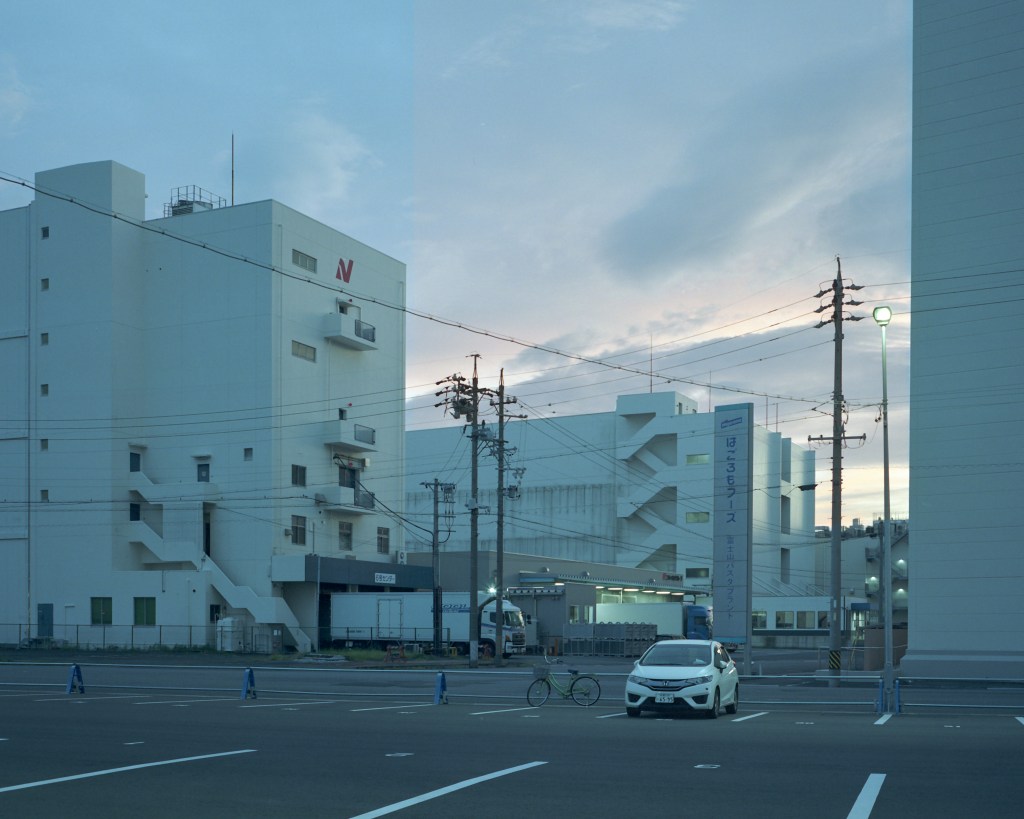
Girato l’angolo al limitare della piazza mi trovai davanti un muro di persone che mi voltavano le spalle. Schiene una a fianco all’altra. Qualcuno guardava verso l’alto, altri a terra. Così tanti, così vicini, fermi in un’arteria tra le più dinamiche e refrattarie alla contemplazione della città.
Qualche parola sussurrata; tutti rivolti verso lo stesso edificio. Ma c’era qualcosa di innaturale nella posizione dei corpi.
Alcuni avevano le gambe divaricate nel mezzo di una falcata, le braccia incrociate dietro la schiena, le mani infilate nelle tasche; altri una mano al collo. Gli occhi strizzati. I denti sulle labbra. Le pupille fisse. Congelati all’incrocio di una strada insignificante, dove di solito nessuno guardava nessuno. Se non fosse stato per la brezza che saliva dal Pacifico, avrei potuto scambiarli per una fotografia, o meglio per un fermo immagine.
Come la fine di quel film francese in cui il ragazzino, dopo aver corso verso il mare, si rende conto che non può andare oltre e si ferma. Non c’è via di fuga al mondo. Si gira verso lo spettatore, fermo immagine, la scritta fine che compare a tappargli la bocca.
Rimasi fermo a guardare quando i corpi diventarono blu. Le ombre sparirono. Ricomparivano poco più avanti. Poi tornavano indietro. Un ululato mi trapassò la testa. La volante della polizia entrò da sinistra, i lampeggianti blu accarezzavano uno dopo l’altro i passanti, proiettando sui palazzi l’ombra di un coro sinistro. Una seconda auto seguì la prima e si fermò al suo fianco. Mi feci avanti.
Sull’asfalto scuro un corpo giaceva immobile. Ne persi subito la visuale quando la polizia lo accerchiò e iniziò a far disperdere la folla. Quella gente aveva assistito allo schianto. L’immobilità dei loro corpi, gli sguardi fissi, come una colonia di formiche colta all’improvviso dal nemico. Il tonfo carnoso. Ossa fratturate. Organi sconquassati. Liquidi, forse. E l’aria nei polmoni? Che suono fa quando, al momento dello schianto, viene spinta fuori?
Se nei film, per il ruggito di un dinosauro, si usava la frenata di un tir combinata con i versi di un leone e di un orso, per un corpo che si schianta al suolo sarebbe bastato mixare il suono di una bistecca lanciata con forza su un piano di marmo con lo sgretolarsi di un guscio d’uovo. E che altro?
La storia di qualcuno era appena finita. Il film si concludeva con la morte del protagonista; un volo dal decimo piano e la gente immobile a guardare. Nero. Titoli di coda.
Non potei fare a meno di riscrivere il finale. Perché far morire lì il protagonista? Non sarebbe stato più giusto far credere che tutto finisse lì e poi… non so, un colpo di scena?
Il protagonista si butta dalla finestra, precipita a tutta velocità verso l’asfalto, i capelli all’indietro, i vestiti che vibrano, l’aria che gli allarga la bocca, le mani che si portano lentamente verso il viso. Qualche passante alza lo sguardo e inizia a indicarlo, a urlare, mentre l’uomo che cade forse ci ha ripensato, non voleva davvero morire o forse non stava facendo ciò che sembrava.
A pochi centimetri da terra ecco che il suo corpo vira improvvisamente. La schiena si inarca. Il collo si tende all’indietro. All’ultimo istante risale verso il cielo. Le braccia spinte lungo i fianchi, i pugni chiusi. La velocità riprende ad aumentare dopo aver rallentato per un attimo a causa della brusca virata e, come un razzo, con propulsori a combustione che sputano fuoco da sotto i tacchi, il corpo vola verso le nuvole lasciando una scia di fumo viola.
La folla incredula torna a respirare e l’uomo che ora sta volando sparisce; un puntino che brilla nel cielo del crepuscolo. L’inquadratura rimane fissa sul cielo vuoto, sulle sfumature del tramonto che si stendono sulle nuvole pannose. Nell’angolo in basso a destra dello schermo compare una parola, tre kana sinuosi: つづく (tsuzuku), “continua”. Ripresi a camminare, in fondo, non era la fine..
ENGLISH VERSION
As I turned the corner at the edge of the square, I found myself facing a wall of people with their backs to me. Rows of shoulders, side by side. Some were looking up, others down at the ground. So many of them, standing so close together, perfectly still in one of the city’s busiest arteries, a place usually hostile to contemplation.
A few whispered words drifted through the crowd. Everyone was staring at the same building. Yet there was something unnatural about the way they stood.
Some had their legs frozen mid-stride, feet planted wide apart. Others kept their arms folded behind their backs, hands buried in their pockets, or one hand resting against the nape of the neck. Eyes narrowed. Teeth pressed into lips. Pupils fixed. They seemed suspended in time at the intersection of an otherwise insignificant street, a place where people rarely looked at one another. Had it not been for the breeze rising from the Pacific, I might have mistaken them for a photograph—or rather, a freeze-frame.
Like the ending of that French film in which the boy, after running all the way to the sea, realizes he can go no farther and stops. There is no escape in this world. He turns toward the viewer. Freeze-frame. The End appears and seals his mouth shut.
I stood there watching when the bodies turned blue. Their shadows vanished, only to reappear a few yards ahead, then slide back again. A siren pierced my skull. A police cruiser entered from the left, its flashing lights brushing one passerby after another, projecting onto the buildings the shadow of a sinister chorus. A second car followed and pulled up alongside the first. I stepped forward.
On the dark asphalt, a body lay motionless. I lost sight of it almost immediately as the police closed in and began dispersing the crowd. These people had witnessed the impact. Their rigid stillness, their fixed gazes—it was like watching a colony of ants suddenly confronted by a predator. The fleshy thud. Bones splintering. Organs thrown into chaos. Fluids, perhaps. And the air in the lungs? What sound does it make when, at the instant of impact, it is forced out?
In films, the roar of a dinosaur was made by combining the screech of a truck’s brakes with the cries of a lion and a bear. For a body hitting the pavement, it would be enough to mix the sound of a steak hurled onto a marble slab with the crumbling crack of an eggshell.
And what else?Someone’s story had just ended.
The film concluded with the death of its protagonist: a fall from the tenth floor, a crowd standing motionless below, watching.Black screen.Credits.Yet I couldn’t help rewriting the ending.
Why kill the protagonist there?Wouldn’t it be better to make us believe everything ended at that precise moment and then—something else, a twist?The protagonist throws himself from the window and plummets toward the asphalt. Hair swept back. Clothes vibrating in the rush of air. The wind forcing his mouth open. His hands slowly rising toward his face. A few pedestrians glance upward and begin pointing, shouting, while the falling man perhaps changes his mind. Perhaps he never truly wanted to die. Or perhaps he was never doing what it seemed he was doing.
Then, only inches from the ground, his body suddenly veers.His spine arches. His neck snaps backward. At the last possible instant he shoots upward, back toward the sky. His arms are pressed against his sides, fists clenched. After slowing for a heartbeat during the abrupt turn, he accelerates again. Like a rocket, with combustion thrusters blasting fire from beneath his heels, he streaks toward the clouds, leaving behind a trail of violet smoke. The crowd, stunned, remembers to breathe. The man who was falling is now flying. Soon he disappears, a single bright speck in the twilight sky.
The camera remains fixed on the empty heavens, on the layers of sunset spreading across the heavy clouds. In the lower-right corner of the screen, a word appears: three flowing kana.つづく (tsuzuku) — To Be Continued. I started walking again. After all, it wasn’t the end.
 Nipponia Magazine